Toronto Raptors vs Cleveland Cavaliers Match Player Stats: Full Game 5 Analysis, Box Score & Top Performers

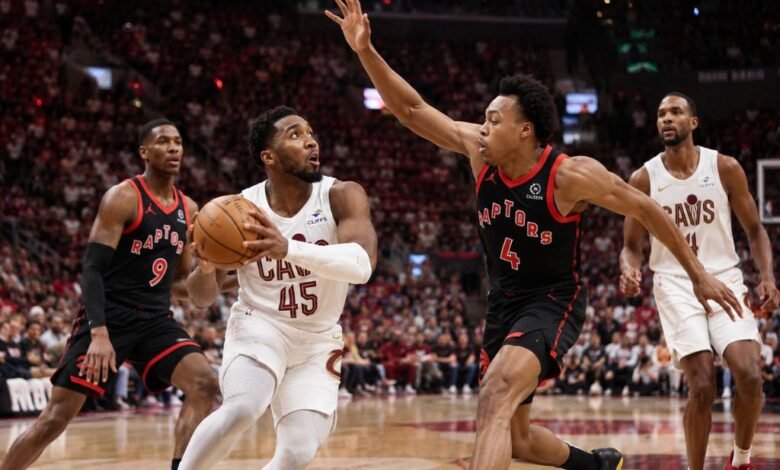
The pressure of the NBA Playoffs often reveals a team’s true character, and Game 5 between the Toronto Raptors and Cleveland Cavaliers delivered exactly that. With the first-round series tied at 2-2, both teams entered Rocket Arena in Cleveland on Wednesday, April 29, 2026, knowing that history favored the winner of this pivotal contest. What followed was an intense battle filled with momentum swings, outstanding individual performances, and a dramatic comeback that ultimately put the Cavaliers one win away from advancing.
Cleveland erased multiple double-digit deficits to defeat Toronto 125-120, taking a 3-2 lead in the Eastern Conference first-round series. The victory highlighted the Cavaliers’ resilience, as they recovered from a sluggish first half with a dominant stretch spanning the end of the third quarter and the beginning of the fourth.
Game Information
Match: Toronto Raptors vs Cleveland Cavaliers
Competition: NBA Eastern Conference First Round – Game 5
Date: Wednesday, April 29, 2026
Venue: Rocket Arena, Cleveland, Ohio
Final Score: Cleveland Cavaliers 125, Toronto Raptors 120
With the series tied entering Game 5, the stakes could not have been higher. Historically, teams that win the fifth game of a best-of-seven series tied at two games apiece hold a significant advantage in eventually winning the series. Cleveland embraced that opportunity, overcoming an explosive offensive start from Toronto to reclaim control when it mattered most.
Quarter-by-Quarter Score
| Quarter | Toronto Raptors | Cleveland Cavaliers |
|---|---|---|
| First | 34 | 38 |
| Second | 40 | 29 |
| Third | 29 | 33 |
| Fourth | 17 | 25 |
| Final | 120 | 125 |
Toronto entered halftime with a 74-67 advantage after producing one of its most efficient offensive halves of the postseason. The Raptors shot an impressive 64.4 percent from the field during the opening two quarters, moving the ball crisply and consistently finding quality scoring opportunities.
The Cavaliers, however, never appeared rattled. Instead of forcing contested shots, Cleveland remained patient and gradually tightened its defense while increasing the pace offensively. That adjustment proved decisive as the game entered its closing stages.
Raptors Start Fast Behind Balanced Offense
Toronto’s opening-half performance showcased everything that had made the club competitive throughout the season. The Raptors attacked the paint aggressively, shared the basketball effectively, and consistently converted high-percentage looks around the basket.
RJ Barrett quickly established himself as Toronto’s primary scoring threat. His aggressive drives and timely perimeter shooting kept Cleveland’s defense under constant pressure. Scottie Barnes orchestrated the offense with his trademark versatility, contributing as both a scorer and facilitator while controlling the tempo whenever the Raptors pushed the ball in transition. Young contributors also stepped up, giving Toronto valuable production throughout the rotation and allowing the visitors to build multiple double-digit leads.
Everything seemed to be working in Toronto’s favor midway through the second quarter. The Cavaliers struggled to contain dribble penetration, while the Raptors continued to capitalize on defensive breakdowns. Entering halftime with a seven-point cushion, Toronto looked well positioned to steal a crucial road victory.
Cleveland Responds with Championship-Level Composure
Playoff basketball often turns on momentum, and Cleveland completely changed the game’s direction after the intermission.
Instead of relying solely on isolation scoring, the Cavaliers emphasized defensive intensity and faster ball movement. Their communication improved dramatically, forcing Toronto into more difficult shots while generating transition opportunities at the other end.
The turning point arrived late in the third quarter when Cleveland unleashed a remarkable 27-8 scoring run. What had been a comfortable Raptors lead quickly disappeared as the Cavaliers energized both the crowd and their own bench. Every defensive stop fueled another fast-break opportunity, and the atmosphere inside Rocket Arena shifted entirely in Cleveland’s favor.
The Cavaliers carried that momentum into the fourth quarter, where disciplined execution proved decisive. Toronto, so efficient during the first half, struggled to recreate the same offensive rhythm against Cleveland’s increasingly physical defense. The Raptors managed only 17 points in the final period, while the Cavaliers continued making timely plays on both ends of the floor to complete the comeback.
Game-Changing Moments
Several key sequences defined the outcome of Game 5.
Toronto dominated offensively before halftime, but Cleveland refused to panic despite trailing by double digits on multiple occasions. The Cavaliers gradually reduced turnovers, controlled defensive rebounds more effectively, and began winning the physical battles inside the paint.
The 27-8 run bridging the third and fourth quarters completely altered the contest. Cleveland’s defensive pressure forced Toronto out of its offensive comfort zone, while timely scoring from multiple Cavaliers ensured the home team never surrendered the lead after completing its comeback.
Another significant storyline involved injuries. Toronto forward Brandon Ingram exited the game because of a heel injury after limited action, further reducing the Raptors’ offensive depth. Meanwhile, guard Immanuel Quickley remained unavailable, leaving Toronto with fewer experienced options during the game’s decisive moments.
As the final buzzer sounded, Cleveland celebrated one of its most resilient victories of the postseason, while Toronto was left to regroup before returning home for an elimination game.
Complete Player Stats Analysis: Stars Shine as Cavaliers Finish Strong
Game 5 featured elite performances from both sides, with several players delivering playoff-caliber outings. While Toronto controlled much of the first three quarters through balanced scoring and efficient offense, Cleveland’s biggest names stepped up in the closing minutes to complete a remarkable comeback. The contrast between Toronto’s early execution and Cleveland’s late-game composure ultimately decided one of the most entertaining games of the first-round series.
Cleveland Cavaliers Player Performances
Donovan Mitchell once again proved why he is Cleveland’s franchise player. The All-Star guard finished with 31 points, consistently attacking the basket while knocking down timely perimeter shots. Mitchell carried much of the offensive burden during the Cavaliers’ comeback, forcing Toronto’s defense to collapse and creating opportunities for his teammates. His ability to score under pressure helped shift the momentum permanently in Cleveland’s favor.
Evan Mobley delivered another complete two-way performance with 23 points, while making perhaps the biggest shots of the night. The young forward connected on two critical three-pointers early in the fourth quarter that gave Cleveland its first meaningful lead after trailing for much of the contest. Beyond his scoring, Mobley altered shots around the rim, secured key defensive rebounds, and demonstrated why he is considered one of the NBA’s premier young defenders.
Dennis Schröder emerged as the unexpected hero in the final quarter. Although relatively quiet for most of the evening, the veteran guard exploded late, scoring 11 of his 19 points in the fourth quarter. His aggressive drives, confident jump shooting, and steady decision-making stabilized Cleveland’s offense when every possession mattered. Schröder’s late-game production relieved pressure from Mitchell and ensured the Cavaliers maintained control during Toronto’s final comeback attempts.
Jarrett Allen once again anchored Cleveland’s interior defense. While his offensive numbers were modest compared to Mitchell and Mobley, Allen controlled the glass, protected the paint, and repeatedly forced Toronto into difficult finishes near the basket. His rebounding allowed Cleveland to generate valuable second-chance opportunities throughout the second half.
James Harden contributed as Cleveland’s primary playmaker. Despite entering Game 5 after struggling with turnovers earlier in the series, Harden managed the offense more effectively, distributing the ball efficiently and helping orchestrate the Cavaliers’ improved ball movement during their decisive scoring run.
Toronto Raptors Player Performances
RJ Barrett produced one of his strongest playoff games, finishing with 30 points while attacking Cleveland from every level of the floor. Barrett’s aggressive drives and confident outside shooting kept Toronto ahead for much of the night. During the opening half, he repeatedly found gaps in Cleveland’s defense and consistently converted difficult scoring opportunities.
Scottie Barnes continued to demonstrate why he is the cornerstone of Toronto’s future. Barnes filled the stat sheet with 17 points, 8 rebounds, and 11 assists, impacting nearly every aspect of the game. His vision and playmaking generated quality looks for teammates throughout the first three quarters, while his versatility allowed Toronto to defend multiple positions effectively. Although his scoring slowed during the fourth quarter, Barnes remained Toronto’s offensive engine until the final buzzer.
Jakob Poeltl quietly delivered another efficient performance in the paint. His rebounding, interior finishing, and defensive presence helped Toronto establish control early. Poeltl consistently battled Jarrett Allen inside and provided valuable rim protection whenever Cleveland attacked the basket.
Toronto also received meaningful contributions from its supporting cast, particularly during the opening half when ball movement and unselfish offense created numerous high-percentage scoring opportunities. However, as Cleveland’s defensive intensity increased, the Raptors’ secondary scorers found it increasingly difficult to generate clean looks.
Team Statistics Comparison
Although Toronto shot exceptionally well during the first half, the overall statistical battle shifted dramatically after halftime.
The Raptors finished with impressive offensive efficiency for much of the contest but struggled in the closing period, missing their first 11 field-goal attempts of the fourth quarter and shooting only 7-for-28 during the final 12 minutes. Cleveland, by comparison, made 9 of its 19 fourth-quarter shots while protecting the basketball and capitalizing on key possessions.
Another significant factor was Cleveland’s improved defensive rebounding. By limiting Toronto’s second-chance opportunities late in the game, the Cavaliers forced the Raptors to rely on half-court execution against a set defense, an area where Cleveland held the advantage during crunch time.
Tactical Breakdown
Toronto’s offensive game plan centered on pace, spacing, and attacking early in the shot clock. During the first half, Scottie Barnes repeatedly initiated transition opportunities, while RJ Barrett exploited mismatches on the perimeter. The Raptors’ crisp passing generated open three-pointers and uncontested finishes around the rim, resulting in one of their most efficient offensive stretches of the postseason.
Cleveland responded by making subtle but crucial defensive adjustments after halftime. The Cavaliers applied greater pressure to Toronto’s primary ball handlers, switched more effectively on screens, and crowded the paint to discourage easy drives. These adjustments disrupted Toronto’s offensive rhythm and gradually shifted momentum toward the home team.
Offensively, Cleveland became far more patient during the second half. Instead of forcing contested isolation shots, the Cavaliers relied on ball movement, inside-out passing, and disciplined shot selection. Mitchell’s shot creation, Mobley’s timely perimeter shooting, and Schröder’s fourth-quarter scoring combined to overwhelm a Raptors defense that had expended significant energy protecting its early lead.
By the final minutes, Cleveland controlled both the pace and the emotional momentum of the game. Their execution under pressure contrasted sharply with Toronto’s offensive struggles, ultimately producing a hard-earned 125-120 victory and a commanding 3-2 series lead heading into Game 6.
Historical Significance of Game 5
Game 5 between the Toronto Raptors and Cleveland Cavaliers may be remembered as one of the defining contests of the 2026 Eastern Conference First Round. Playoff basketball often hinges on momentum, and this matchup demonstrated how quickly fortunes can change over 48 minutes. Toronto appeared to have the game under control after building multiple double-digit leads and shooting exceptionally well during the opening half. Yet Cleveland’s resilience, defensive adjustments, and balanced scoring transformed what looked like a potential road victory for the Raptors into one of the Cavaliers’ most impressive comeback wins of the season.
Historically, winning Game 5 in a best-of-seven series tied 2-2 provides a significant advantage. NBA postseason history shows that teams taking a 3-2 series lead go on to win the series in the vast majority of cases, making Cleveland’s comeback even more meaningful. Rather than simply earning another victory, the Cavaliers shifted the psychological pressure onto Toronto, forcing the Raptors into an elimination game.
How the Result Impacts the Series
The Cavaliers’ 125-120 victory gave them a 3-2 lead in the first-round playoff series, placing Toronto in a must-win situation heading into Game 6. Momentum had clearly shifted after Cleveland erased a second-half deficit, and the confidence gained from such a comeback could prove invaluable as the series continued.
For Toronto, the defeat highlighted several areas requiring immediate improvement. Maintaining offensive consistency over four quarters became the primary concern after a dominant first half gave way to a difficult finish. The Raptors also needed more production from their supporting cast while hoping key injured players could return closer to full strength.
Cleveland, meanwhile, entered Game 6 with multiple reasons for optimism. Donovan Mitchell continued to lead the offense in critical moments, Evan Mobley delivered another outstanding two-way performance, and the team’s defensive identity became increasingly evident during crunch time. If the Cavaliers could replicate their second-half intensity, they would be well positioned to close out the series.
Biggest Takeaways from the Match
Several themes emerged from Game 5 that defined the outcome.
The first was Cleveland’s remarkable resilience. Trailing by double digits against an efficient Toronto offense could have easily resulted in a disappointing home defeat, but the Cavaliers remained composed and trusted their defensive system. Their ability to stay patient offensively while steadily increasing defensive pressure proved decisive.
Another major takeaway was the importance of star performances. Donovan Mitchell once again demonstrated why he is among the NBA’s elite playoff scorers, while Evan Mobley showcased his growth into one of the league’s premier two-way players. Dennis Schröder’s fourth-quarter scoring burst also illustrated the value of experienced veterans in postseason basketball.
For Toronto, RJ Barrett and Scottie Barnes delivered strong individual performances, but the team’s inability to sustain its offensive rhythm during the fourth quarter ultimately overshadowed those efforts. The Raptors’ shooting efficiency dropped significantly as Cleveland tightened its defense, limiting quality scoring opportunities during the game’s most important possessions.
Finally, injuries continued to influence the series. Toronto’s rotation was affected by the absence of Immanuel Quickley and the early exit of Brandon Ingram because of a heel injury, reducing the team’s offensive depth during the decisive stretch of the game.
Looking Ahead
Game 6 promised to be one of the most important contests of the series. Toronto would return home facing elimination, while Cleveland needed just one more victory to advance to the Eastern Conference Semifinals.
For the Raptors, success would depend on rediscovering the offensive efficiency displayed during the opening half of Game 5 while improving late-game execution. Defensive rebounding, ball security, and fourth-quarter shot selection would likely determine whether the series extended to a decisive Game 7.
The Cavaliers, on the other hand, would aim to build on the momentum generated by their comeback victory. Continuing their balanced offensive approach and maintaining defensive intensity would be essential if they hoped to finish the series without giving Toronto another opportunity to recover.
Frequently Asked Questions
Who won the Toronto Raptors vs Cleveland Cavaliers Game 5 on April 29, 2026?
The Cleveland Cavaliers defeated the Toronto Raptors 125-120, taking a 3-2 lead in the Eastern Conference First Round series.
Who was the leading scorer for Cleveland?
Donovan Mitchell led the Cavaliers with 31 points, providing several key baskets during Cleveland’s second-half comeback.
Who scored the most points for Toronto?
RJ Barrett paced the Raptors with 30 points, delivering one of his strongest performances of the postseason.
What was the turning point of the game?
Cleveland’s 27-8 run spanning the end of the third quarter and the beginning of the fourth completely changed the momentum, allowing the Cavaliers to erase Toronto’s lead and seize control.
Which player made the biggest impact besides the leading scorers?
Dennis Schröder played a crucial role by scoring 11 of his 19 points in the fourth quarter, while Evan Mobley contributed at both ends of the floor with timely shooting and elite defense.
Why was this game important?
The victory gave Cleveland a 3-2 series advantage, placing the Cavaliers one win away from advancing and forcing Toronto into an elimination game.
Conclusion
Game 5 between the Toronto Raptors and Cleveland Cavaliers perfectly captured the intensity and unpredictability of NBA playoff basketball. Toronto controlled much of the contest with efficient offense, disciplined ball movement, and outstanding performances from RJ Barrett and Scottie Barnes. However, playoff success is often determined by execution during the final minutes, and Cleveland proved superior when the pressure reached its highest point.
Led by Donovan Mitchell’s scoring brilliance, Evan Mobley’s two-way excellence, and Dennis Schröder’s late-game heroics, the Cavaliers completed one of their most impressive comeback victories of the postseason. Their defensive adjustments after halftime disrupted Toronto’s rhythm, while disciplined offensive execution allowed them to capitalize on every critical possession.
As the series moved to Game 6, Cleveland carried not only a 3-2 lead but also the momentum gained from overcoming adversity. Toronto, meanwhile, faced the challenge of responding to one of its most disappointing fourth-quarter performances of the playoffs. Whether the Raptors could force a Game 7 or the Cavaliers would close out the series remained one of the most compelling storylines of the 2026 NBA Playoffs.