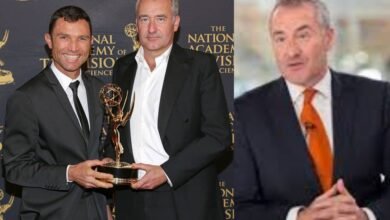
A single frame on screen can feel alive, textured, and emotionally grounded—but behind that illusion stands a designer shaping every wall, prop, and shadow. Pawlo Wintoniuk belongs to that unseen class of creators who build entire visual worlds without stepping into the spotlight. His work in British film and television has quietly defined the atmosphere of several acclaimed productions, blending storytelling with architectural precision and cinematic imagination.
Also Read Anout: Benny Hemphill
The Craft of Visual Storytelling in Modern Television
The British television landscape has evolved into a global benchmark for high-quality storytelling, and production design plays a central role in that transformation. Pawlo Wintoniuk has worked within this ecosystem for decades, contributing to the visual identity of dramas, thrillers, and youth-oriented series that rely heavily on immersive environments.
Rather than functioning as a background technician, his role consistently sits at the intersection of art and narrative. Every set he helps shape becomes a silent character, supporting mood, tension, and realism. His credits reveal a consistent involvement in projects where atmosphere is as important as dialogue.
Early Career Foundations in Art Departments
Pawlo Wintoniuk’s professional journey began in the structured environment of the art department, where practical skills and collaboration are essential. Early credits show involvement in roles such as art department assistant, standby art director, and draughtsman.
These positions are often the training ground for larger creative responsibility. They require precision, adaptability, and a deep understanding of how sets are constructed under time constraints. His early contributions in productions such as Glorious 39 and other British projects reflect the kind of hands-on experience that shapes a strong foundation in production design.
Working within these roles also meant constant interaction with set builders, prop teams, directors, and cinematographers, allowing him to understand how visual design must align with storytelling needs rather than exist in isolation.
House of Anubis: A Defining Television Contribution
One of the most significant milestones in Pawlo Wintoniuk’s career is his extensive work on House of Anubis, a teen mystery drama that gained international popularity.
Within this series, he served as a series art director, contributing across a substantial number of episodes. The show demanded a highly controlled visual world, centered around a mysterious boarding school with hidden secrets, symbolic architecture, and evolving narrative spaces.
His work helped maintain visual continuity across episodes while supporting the show’s layered storytelling style. The series relied heavily on recurring locations such as corridors, dormitories, and hidden chambers, all of which required consistent design language to maintain immersion. His contribution ensured that these environments felt believable, atmospheric, and narratively cohesive across multiple seasons.
The success of House of Anubis internationally also highlights how strong production design can elevate youth television into a globally recognized brand.
Expanding into Film: Atmospheric Storytelling on Screen
Beyond television, Pawlo Wintoniuk has contributed to a number of feature films where production design plays a crucial emotional role. His credits include Another Me, Away, I Am Slave, and Blood.
Each of these projects carries distinct tonal requirements. For example, Another Me explores psychological tension and identity fragmentation, demanding environments that reflect internal instability. His art direction in such films supports narrative psychology rather than simply visual realism.
Similarly, Away required a strong sense of emotional geography, where landscapes and interiors work together to reflect isolation and human vulnerability. His involvement in such projects demonstrates versatility across genres and storytelling styles.
Glorious 39 and Historical Visual Construction
Historical drama presents a different kind of challenge for production designers. Accuracy, texture, and authenticity must work together without distracting from the story. Pawlo Wintoniuk contributed to Glorious 39, a film set in the period leading up to World War II.
Projects like this require extensive research into architecture, materials, and cultural aesthetics of the era. Even small details such as wallpaper patterns, furniture design, and color grading must align with historical reality while still serving cinematic composition.
His participation in such a production reflects an ability to translate historical references into usable visual environments that feel both authentic and emotionally resonant.
Vigil and the Modern Thriller Aesthetic
In more recent years, Pawlo Wintoniuk has worked on Vigil, a high-profile British thriller series known for its claustrophobic environments and tension-filled narrative structure.
The series demanded a stark contrast between confined interiors and vast, isolated settings. Submarine interiors, naval environments, and institutional spaces required careful spatial design to enhance suspense and psychological pressure.
His role as an art director within this production involved shaping environments that feel both realistic and dramatically charged. Every corridor, control room, and sleeping compartment contributes to the emotional intensity of the narrative.
This kind of work demonstrates a mature understanding of how space can influence viewer perception, particularly in thriller storytelling.
Happy Valley and the Realism of British Crime Drama
Another notable contribution in his career is involvement in Happy Valley, a critically acclaimed British crime drama known for its grounded realism and emotional depth.
Unlike stylized productions, Happy Valley relies on naturalistic environments that reflect everyday life in northern England. The production design must avoid artificiality while still supporting narrative tone.
Wintoniuk’s work in such a context focuses on subtlety rather than spectacle. Locations must feel lived-in, functional, and believable, allowing performances and writing to take center stage while still reinforcing mood through visual texture.
House Style Across Multiple Genres
One of the most interesting aspects of Pawlo Wintoniuk’s career is his ability to move across genres without losing design consistency. From youth mystery dramas to psychological thrillers and historical films, his work adapts to the emotional demands of each story.
This adaptability is a key trait in production design. Unlike fixed artistic disciplines, screen design must respond to director vision, budget constraints, shooting schedules, and technical limitations while still maintaining aesthetic coherence.
His filmography suggests a professional who is comfortable operating within both creative ambition and production reality.
The Role of an Art Director in Modern Production
Understanding Pawlo Wintoniuk’s career also requires understanding what an art director actually does within a production pipeline. The role is not limited to drawing sets or selecting props. It involves coordinating entire visual departments, translating script requirements into physical environments, and ensuring continuity across multiple shooting units.
Art directors collaborate closely with production designers, cinematographers, and directors. They interpret narrative themes into tangible spaces that support camera movement, lighting design, and actor performance.
Wintoniuk’s repeated involvement in long-running series indicates a strong ability to manage consistency over time, which is one of the most challenging aspects of television production.
Industry Presence and Professional Reputation
Within industry databases and credit listings, Pawlo Wintoniuk appears consistently across a wide range of British productions. His credits span decades, reflecting not only longevity but also reliability within professional networks.
This type of career trajectory is often built on trust and collaboration. Production teams repeatedly rehire individuals who can deliver under pressure while maintaining creative standards. His continued presence in high-quality productions suggests strong professional recognition within the UK film and television industry.
Conclusion: Building Worlds That Shape Stories
Pawlo Wintoniuk’s career represents the quiet architecture of screen storytelling. While audiences remember characters, dialogue, and plot twists, the environments that shape those experiences are crafted by professionals like him.
From the corridors of House of Anubis to the tension-filled spaces of Vigil, his work demonstrates how production design becomes a narrative language in itself. Every wall, corridor, and set piece contributes to emotional storytelling, guiding viewers without them ever realizing it.
In a film and television industry increasingly driven by visual immersion, the role of art directors like Pawlo Wintoniuk continues to grow in importance. His body of work stands as a testament to how behind-the-scenes creativity shapes the way stories are felt, remembered, and experienced.