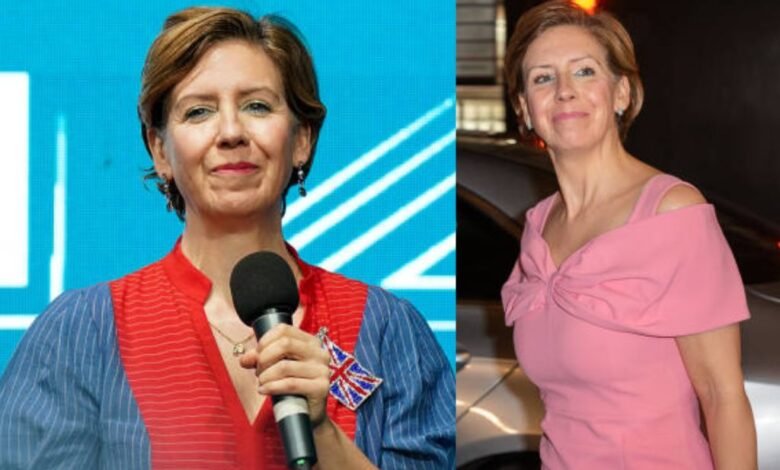
British politics rarely lacks outspoken personalities, but few modern politicians have generated as much attention, controversy, and debate as Andrea Jenkyns. From her rise as a grassroots Brexit supporter to her transformation into one of Reform UK’s most recognizable figures, Jenkyns has built a career defined by rebellion against political convention.
Her political story reflects larger changes inside Britain itself. Traditional party loyalties have weakened, Brexit transformed the political landscape, and populist movements gained strength among voters frustrated with Westminster. Andrea Jenkyns emerged directly from that environment, presenting herself as a politician willing to challenge elites, confront opponents publicly, and embrace political risks many others avoid.
Supporters see her as authentic, fearless, and connected to ordinary voters. Critics view her as divisive and confrontational. Regardless of perspective, her influence on Britain’s modern right-wing political movement has become impossible to ignore.
Early Life and Working-Class Background
Andrea Jenkyns was born on 16 June 1974 in West Yorkshire, England. Unlike many career politicians who entered politics through elite educational institutions or political internships, Jenkyns often highlighted her working-class roots and nontraditional journey into public life.
She left school at 16 and worked various jobs before eventually moving into business and administrative work. Her early employment included working at the bakery chain Greggs, a detail frequently referenced in media coverage because it reinforces her image as a self-made politician rather than a member of Britain’s traditional political establishment.
Her background later became central to her political messaging. Jenkyns repeatedly contrasted her upbringing with what she described as detached Westminster elites. That contrast helped shape her public identity during the Brexit years, particularly among voters who felt ignored by mainstream political parties.
Another aspect of her younger years that attracted media attention was her participation in beauty pageants, including reportedly becoming a finalist in Miss UK competitions. Although critics occasionally used that detail dismissively, supporters argued it reflected her confidence and ambition long before entering politics.
Entering Politics and the Conservative Rise
Andrea Jenkyns formally entered frontline politics during a period of major political instability in Britain. The Conservative Party was facing internal divisions over Europe, immigration, and national identity, while anti-establishment sentiment was rising across the country.
She became the Conservative MP for Morley and Outwood in 2015 after defeating Labour politician Ed Balls, one of the most recognizable figures in British politics at the time. Her victory immediately drew national attention because defeating a senior Labour figure symbolized changing political loyalties in northern England.
Jenkyns quickly positioned herself on the right wing of the Conservative Party. She supported lower immigration, stronger national sovereignty, and tougher positions on crime and cultural issues. These themes later became even more prominent during the Brexit referendum campaign.
Her communication style also made her stand out. Rather than presenting herself as cautious or diplomatic, Jenkyns frequently adopted direct and emotionally charged language. That approach helped her gain visibility in television debates and political interviews, especially during highly polarized national discussions.
Brexit and the Defining Political Moment
Brexit became the defining turning point of Andrea Jenkyns’ career. She emerged as one of the Conservative Party’s strongest supporters of leaving the European Union and built close alliances with pro-Brexit politicians inside Westminster.
For Jenkyns, Brexit represented more than economic policy or trade agreements. She framed it as a struggle over democracy, sovereignty, and national independence. Her speeches often emphasized the idea that ordinary British voters were fighting against powerful political and media institutions trying to block change.
During the Brexit years, she became increasingly aligned with politicians connected to Boris Johnson’s political movement inside the Conservative Party. Like many Brexit-supporting Conservatives, she argued that Britain needed a sharper break from the European Union and a more aggressive approach toward implementing referendum results.
Her visibility grew significantly during this period because media outlets frequently sought outspoken Brexit supporters for interviews and debates. Jenkyns became known for defending controversial positions under intense scrutiny, something that further strengthened her reputation among supporters who valued combative political figures.
Brexit also transformed the broader political environment around her. Traditional party divisions became less important than cultural and ideological identity. Politicians who could communicate emotionally and symbolically gained influence, and Andrea Jenkyns fit naturally into that political shift.
Media Attention and Public Controversies
Few British politicians connected to the modern conservative movement have avoided controversy, and Andrea Jenkyns became a regular subject of public debate.
Part of that attention came from her outspoken personality. She frequently criticized political opponents, trade unions, progressive activism, and what she described as excessive political correctness. Her supporters praised her willingness to say what others avoided, while opponents accused her of encouraging division.
Television appearances often amplified these disagreements. Jenkyns developed a reputation for heated exchanges during interviews and panel discussions, especially on issues involving immigration, Brexit, or national identity. Social media further intensified her public profile because clips from interviews and speeches regularly circulated online.
One reason she remained politically relevant even after setbacks was her understanding of modern media dynamics. Jenkyns recognized that visibility often matters as much as party hierarchy in contemporary politics. She used controversy not simply as confrontation, but as a way to remain central in national conversations.
Her critics argued that this style contributed to increasing political polarization in Britain. Yet supporters believed her approach reflected public frustration with carefully scripted political language.
The divide between those perspectives became one of the defining features of her political image.
Relationship With Boris Johnson and Conservative Factionalism
Andrea Jenkyns became closely associated with the Boris Johnson era of Conservative politics. Both figures appealed to Brexit voters, emphasized anti-establishment rhetoric, and criticized traditional political institutions.
Jenkyns strongly defended Johnson during periods of internal Conservative conflict. She viewed him as a leader capable of reshaping British politics around nationalism, Brexit implementation, and voter dissatisfaction with established political culture.
Her loyalty to Johnson also connected her to wider factional battles inside the Conservative Party. During the post-Brexit years, the party experienced ongoing struggles between moderates and right-wing populists. Jenkyns positioned herself firmly on the populist side of that divide.
However, the Conservative Party’s decline after years of internal conflict eventually weakened many politicians associated with that movement. Public frustration over economic problems, leadership instability, and scandals damaged the party’s support base.
Jenkyns herself ultimately lost her parliamentary seat during the 2024 general election, reflecting the broader collapse of Conservative support in several areas.
For many politicians, such a defeat would have marked the end of their national political relevance. Instead, Andrea Jenkyns used it as the beginning of a political reinvention.
Transition to Reform UK
After her departure from Parliament, Andrea Jenkyns moved toward Reform UK, the party strongly associated with Nigel Farage and right-wing populist politics in Britain.
This transition reflected deeper political changes happening across the British right. Reform UK increasingly attracted voters and former politicians who believed the Conservative Party had abandoned Brexit-era promises or become disconnected from public concerns.
Jenkyns fit naturally within Reform UK’s messaging. The party emphasized immigration control, anti-establishment politics, spending cuts, and criticism of mainstream institutions. Those themes closely matched the positions she had promoted throughout her political career.
Her decision to align with Reform UK also demonstrated how fragmented British conservatism had become after Brexit. Instead of operating as a unified political force, the right increasingly split between traditional Conservatives and populist movements promising more radical change.
Andrea Jenkyns quickly became one of Reform UK’s most visible figures because she already possessed national recognition, media experience, and a loyal support base among right-wing voters.
The Greater Lincolnshire Mayoral Victory
The biggest political comeback of Andrea Jenkyns’ career came during the 2025 Greater Lincolnshire mayoral election.
Running as Reform UK’s candidate, she campaigned aggressively on issues including immigration, local government spending, economic frustration, and anti-establishment reform. Her campaign portrayed traditional parties as disconnected from ordinary communities and promised a tougher, more confrontational style of leadership.
The election became nationally significant because it tested whether Reform UK could convert protest support into actual governing power. Jenkyns’ decisive victory provided a major answer.
Winning the mayoralty gave Reform UK one of its most important electoral successes and elevated Andrea Jenkyns back into the center of British political discussion. Commentators viewed the result as evidence that populist right-wing politics remained powerful even after the Brexit referendum years had passed.
Her victory speech generated immediate controversy after she criticized what she described as “soft touch Britain.” Supporters praised the comments as honest and direct, while opponents argued the language deepened political division.
The mayoral win also demonstrated another important reality of modern politics: personal political brands increasingly matter more than party loyalty alone. Andrea Jenkyns had transformed herself from a defeated Conservative MP into a leading figure within an entirely different political movement.
Political Style and Ideological Identity
Andrea Jenkyns represents a broader international trend in conservative politics where emotional connection, outsider messaging, and direct communication often matter more than traditional political caution.
Her speeches frequently focus on themes such as patriotism, sovereignty, border control, economic frustration, and distrust of political elites. These ideas resonate strongly with sections of the electorate that feel culturally ignored or economically marginalized.
Unlike traditional conservative politicians who often prioritize careful language and institutional stability, Jenkyns embraces confrontation as part of her political identity. She presents herself as someone willing to challenge powerful interests publicly rather than compromise behind closed doors.
That approach has advantages and risks. It helps generate media attention and passionate support, but it also attracts intense criticism and controversy. Andrea Jenkyns has repeatedly shown a willingness to accept those risks if it strengthens her connection with supporters.
Her rise also illustrates how British politics increasingly resembles broader populist movements seen in countries such as the United States, Italy, and parts of Europe, where political identity is shaped as much by cultural conflict as economic policy.
Public Perception and Lasting Influence
Public reactions to Andrea Jenkyns remain sharply divided. Admirers describe her as authentic, resilient, and courageous. Critics describe her as inflammatory and politically divisive.
Yet both sides generally agree on one thing: she commands attention.
Her political journey from working-class Yorkshire roots to Parliament and eventually Reform UK leadership positions reflects the volatility of modern British politics. Traditional career paths no longer guarantee success, while outsider figures can rapidly gain influence by connecting with public dissatisfaction.
Andrea Jenkyns also symbolizes the continuing transformation of Britain’s conservative movement after Brexit. The political realignment triggered by the referendum did not end when Britain left the European Union. Instead, it reshaped ideological loyalties, party structures, and national political debate for years afterward.
Whether her future lies in national leadership, regional governance, or continued populist activism, Andrea Jenkyns has already established herself as one of the most recognizable and controversial figures of post-Brexit British politics.