Cani Rossi: The Mystery of Red Dogs Between Jungle Myth, Literature, and Real Wildlife Science

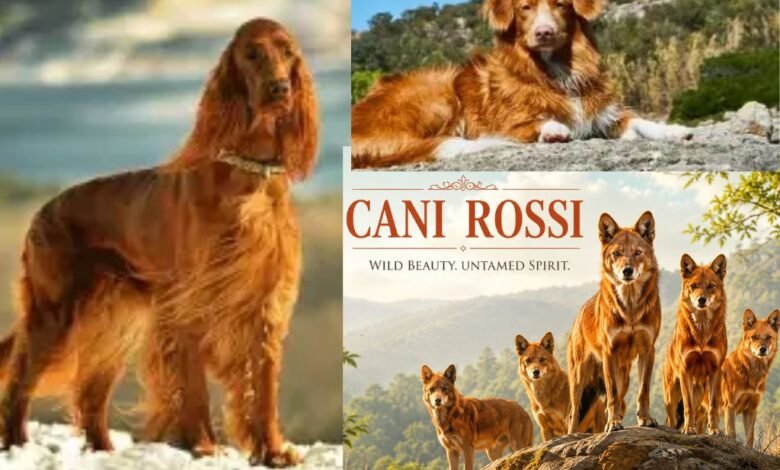
A flash of russet fur cutting through dense jungle shadows has long carried an air of mystery, fear, and fascination. The phrase Cani Rossi evokes this exact image: wild red-coated canids moving as a coordinated force through forests, appearing almost like a living storm. Across literature, biology, and cultural storytelling, this term has traveled far beyond a simple description of animals. It has become a symbol that merges real-world ecology with imagination, survival, and ancient storytelling traditions.
The Origins and Meaning of Cani Rossi
The expression Cani Rossi, translated directly from Italian as “red dogs,” does not belong to a single discipline or context. Instead, it exists at the intersection of language, natural history, and literary imagination. In its most direct meaning, it refers to wild canids with reddish coats, most commonly associated with the species known scientifically as the dhole.
However, the phrase also carries symbolic weight in European literary traditions, where “red dogs” are often depicted as relentless, organized, and highly dangerous predators. The color red itself intensifies the perception, suggesting aggression, urgency, and uncontrollable force. Over time, Cani Rossi became more than a zoological reference; it turned into a narrative device used to express chaos entering structured ecosystems.
Literary Foundations of the Red Dogs Myth
One of the most influential appearances of the “red dogs” concept emerges from classic colonial-era literature. The British writer Rudyard Kipling introduced the idea of ferocious wild dog packs in his jungle stories, where they are portrayed as one of the most feared threats to forest life.
Within his jungle narratives, the “red dogs” are not ordinary predators. They are depicted as an invading force, moving in disciplined packs, overwhelming everything in their path. Unlike solitary hunters, they represent collective destruction, where unity becomes a weapon of survival and conquest. This portrayal made a deep impression on readers, especially because it contrasted sharply with the structured hierarchy of the jungle’s native animals.
The idea of Cani Rossi in literature is not simply about animals. It is about invasion, instability, and survival under pressure. Kipling’s portrayal transformed them into symbolic antagonists, representing forces that disrupt balance and challenge established order.
Narrative Role and Symbolism in Jungle Stories
In jungle literature, the arrival of the red dogs marks a turning point. Their presence introduces urgency and existential threat. The jungle, usually governed by its own rules and alliances, becomes a battlefield of survival strategy. The red dogs are portrayed as relentless, almost unstoppable unless met with unity and intelligence.
Their symbolic function goes beyond physical danger. They represent external forces that do not respect boundaries or traditions. In this sense, Cani Rossi become metaphors for invasion, environmental disruption, or any uncontrollable system that expands without restraint.
The psychological effect of these creatures in storytelling is equally important. Fear is not generated only by their strength but by their coordination. A single predator can be understood and countered, but a unified pack introduces unpredictability, making them far more threatening in narrative design.
The Biological Reality Behind Cani Rossi
Beyond literature, the real-world inspiration for Cani Rossi is most commonly associated with the dhole, scientifically known as Cuon alpinus. This species is native to Asia and is recognized for its reddish or rust-colored coat, which gives rise to the “red dog” description.
Dholes are medium-sized wild canids that live and hunt in highly organized social packs. Their appearance is striking: lean bodies, bushy tails, and fur that ranges from golden red to deep copper tones depending on geography and light conditions. Unlike many solitary predators, they depend heavily on cooperation for survival.
Their ecological role is significant. Dholes are apex or near-apex predators in many ecosystems, helping regulate populations of deer and other herbivores. This balance is crucial for forest health, as it prevents overgrazing and maintains biodiversity.
Social Structure and Hunting Behavior
One of the most fascinating aspects of Cani Rossi in biological reality is their social intelligence. Dhole packs operate through coordinated movement, shared decision-making, and collective hunting strategies. They communicate using whistles, body language, and subtle vocal signals rather than loud howls typical of wolves.
Their hunting technique is based on endurance rather than brute force. Instead of overpowering prey instantly, they chase it over long distances, gradually exhausting it. This strategy requires patience, coordination, and strong social bonds within the pack.
Unlike many predators that rely on hierarchy dominated by a single alpha, dhole packs function with more fluid leadership structures. Decision-making can shift depending on context, terrain, and hunting conditions. This adaptability is one reason they are highly successful in dense forest environments.
Habitat, Distribution, and Survival Challenges
Cani Rossi in the wild are primarily found across parts of India, Southeast Asia, and fragmented regions of Central and Eastern Asia. Their habitats include tropical forests, dry deciduous forests, and mountainous regions where prey availability supports pack hunting lifestyles.
Despite their ecological importance, their population has declined significantly in many regions. Habitat fragmentation, human-wildlife conflict, and reduction in prey species have all contributed to their vulnerable conservation status. In several countries, dholes are now rare or locally extinct in areas where they once thrived.
Their survival depends heavily on protected forest corridors and conservation policies that preserve large, uninterrupted habitats. Because they require vast territories to support pack hunting, even moderate fragmentation can severely impact their long-term survival.
Cultural Interpretations of Cani Rossi
The idea of Cani Rossi extends far beyond zoology and literature. In cultural imagination, they often represent untamed nature itself. They are neither fully feared nor fully admired; instead, they occupy a complex emotional space where danger and beauty coexist.
In some interpretations, they symbolize unity and cooperation. Their success as hunters depends entirely on teamwork, making them a natural metaphor for collective strength. In other interpretations, they embody chaos, representing forces that cannot be controlled by human systems or traditional hierarchies.
European readers encountering Kipling’s jungle narratives often viewed Cani Rossi as exotic and mysterious, reinforcing the idea of distant wilderness filled with unknown threats. Over time, this contributed to their mythic status in storytelling traditions.
The Boundary Between Myth and Reality
One of the most intriguing aspects of Cani Rossi is the blurred boundary between fiction and biology. While inspired by real animals, their literary depiction often exaggerates traits for dramatic effect. Real dholes are efficient predators but not supernatural forces of destruction.
This blending of myth and reality reflects a broader pattern in human storytelling. Animals become symbols when observed through the lens of fear, admiration, or cultural interpretation. The red dog transforms from a species into an idea, shaped by narrative needs rather than scientific accuracy alone.
Understanding this dual identity is essential. It allows readers to appreciate both the ecological importance of the dhole and the literary power of its symbolic representation.
Conservation and Modern Relevance
Today, Cani Rossi are more relevant than ever in environmental discussions. As apex predators, their decline signals deeper ecological imbalances within forest ecosystems. Conservation efforts focus on habitat protection, anti-poaching measures, and ecological research to understand their behavior more clearly.
Their survival is not only a matter of preserving a species but also maintaining ecological integrity. When such predators disappear, herbivore populations can increase unchecked, leading to forest degradation and loss of biodiversity.
Modern wildlife conservation programs increasingly highlight the importance of lesser-known predators like dholes, recognizing that their role is just as critical as more famous species such as tigers or wolves.
Conclusion: The Enduring Legacy of Cani Rossi
Cani Rossi remain a powerful blend of myth, literature, and biology. They exist simultaneously as real animals navigating dense forests and as symbolic figures in stories that explore survival, unity, and conflict. From the pages of jungle literature shaped by Rudyard Kipling to the real ecosystems inhabited by Cuon alpinus, their presence continues to captivate human imagination.
Their legacy endures because they embody contradiction: fear and cooperation, destruction and balance, myth and reality. In every interpretation, Cani Rossi remain more than just “red dogs.” They are a reminder of nature’s complexity and storytelling’s power to transform living beings into enduring symbols.
You May also Read About : Thomas Bangalter
You May also Read About : Stichting Bouwresearch