i’m a pregnant woman. are nivea products safe compared to burt’s bees or mustela?

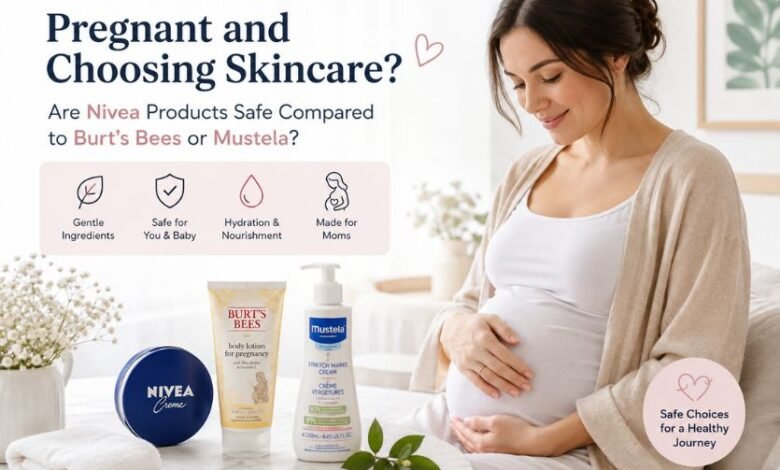
Pregnancy often changes the way skincare feels and behaves on the body, and it also changes how carefully ingredients are examined. Products that once felt completely harmless suddenly raise questions, especially when hormones make skin more sensitive and when advice from different sources starts to conflict. Among the most common comparisons is between widely available drugstore brands like Nivea and more “natural” or maternity-focused brands like Burt’s Bees and Mustela. The real concern is not branding or marketing claims, but how safe each product is during pregnancy when applied regularly to the skin.
Also Read: Droven.io ai career roadmap
This discussion is less about choosing a perfect brand and more about understanding how skincare safety works during pregnancy. The body absorbs very small amounts of topical ingredients, and most everyday moisturizers are considered low risk. However, certain active ingredients and additives are often avoided because they may not be recommended during pregnancy, even if the evidence is limited. That is where the differences between Nivea, Burt’s Bees, and Mustela become important.
Understanding skincare safety during pregnancy
Pregnancy skincare safety depends primarily on ingredients rather than brand identity. Many people assume that “natural” automatically means safe or that a well-known pharmaceutical-style brand is risky, but research and dermatology guidance suggest a more balanced view.
The skin acts as a barrier, and most moisturizers remain on the surface layers. Only a very small fraction of ingredients typically reach deeper circulation. Because of this, everyday hydration products are generally considered safe for most pregnant individuals. The concern arises when products contain certain active compounds that have stronger biological effects or lack sufficient pregnancy-specific testing.
Common ingredient categories that are usually avoided during pregnancy include retinoid derivatives due to their vitamin A activity, strong exfoliating acids in high concentrations, and certain chemical additives depending on formulation. Fragrance sensitivity also becomes more relevant because hormonal changes can increase irritation or allergic reactions.
Nivea products during pregnancy
Nivea is one of the most widely used skincare brands globally, and its product range is broad. It includes simple moisturizers, body lotions, lip balms, and more advanced anti-aging or firming treatments. The safety profile of Nivea depends heavily on which category is being used.
Basic Nivea creams and lotions are generally considered low risk during pregnancy because they focus on hydration and barrier support. These types of formulations typically include ingredients such as glycerin, mineral oils, and basic emollients designed to lock in moisture rather than alter skin function. These are commonly used even in sensitive skin conditions.
However, Nivea also produces targeted skincare lines that include anti-aging or skin-firming products. These may contain active ingredients or botanical extracts that are not always recommended during pregnancy depending on concentration and formulation. The key point is that not all Nivea products are equal in safety profile, even though the brand itself is not considered unsafe.
Fragrance is another consideration. Many Nivea products contain added fragrance, which is not inherently harmful but may become irritating during pregnancy when skin sensitivity increases. For this reason, fragrance-free or lightly scented versions are often preferred.
Burt’s Bees and the natural skincare assumption
Burt’s Bees is often associated with natural skincare, which leads many pregnant individuals to assume it is automatically safer. While the brand does emphasize botanical and naturally derived ingredients, natural origin does not guarantee pregnancy safety.
Many Burt’s Bees products rely on plant oils, beeswax, and essential oils. These ingredients are generally mild in low concentrations, but essential oils can sometimes be irritating or too potent for sensitive skin. Pregnancy can amplify sensitivity, making reactions more likely even to products that were previously well tolerated.
Lip balms and basic moisturizers from Burt’s Bees are commonly used during pregnancy and are generally considered low risk. These products usually contain simple combinations of waxes and oils that help protect the skin barrier. However, more complex products, especially those with strong natural fragrances or concentrated botanical blends, require more caution.
The key understanding with Burt’s Bees is that “natural” should not replace ingredient review. Some plant-based compounds are powerful biologically active substances, and while topical exposure is typically low, sensitivity varies widely during pregnancy.
Mustela and pregnancy-focused skincare positioning
Mustela is often viewed differently because it is heavily marketed toward babies and pregnant individuals. Many of its products are designed specifically with sensitive skin and maternity use in mind, which makes it a frequent recommendation in pregnancy skincare discussions.
A significant portion of Mustela’s product line focuses on gentle cleansing and hydration, often using formulations tested for sensitive skin. Stretch mark creams and body care products are particularly popular among pregnant users because they are designed with elasticity and hydration support in mind.
However, even with Mustela, it is important not to assume universal safety across all products. Some formulations still include fragrances or botanical extracts, and not every product is specifically labeled or designed for pregnancy use. The advantage of Mustela is more about product philosophy and formulation direction rather than guaranteed safety across the entire range.
Compared to Nivea and Burt’s Bees, Mustela often sits in the middle ground where formulations are generally more aligned with sensitive skin needs, but still require ingredient-level checking for complete confidence.
Comparing Nivea, Burt’s Bees, and Mustela in practical terms
When comparing these three brands, the most accurate way to understand safety is to focus on formulation intent rather than marketing identity. Nivea offers a mix of simple and advanced skincare, meaning it ranges from very basic moisturizers to more complex anti-aging products. Burt’s Bees emphasizes natural ingredients but may include essential oils and botanical extracts that require caution for sensitive users. Mustela focuses more consistently on sensitive skin and maternity-oriented products but is still not entirely uniform across its catalog.
From a practical standpoint, basic moisturizers from all three brands tend to fall into the generally safe category for pregnancy use. These products typically aim to hydrate and protect rather than treat or modify skin behavior. The differences become more noticeable in specialized products where active ingredients or complex blends are used.
Another important factor is fragrance sensitivity. Nivea often uses synthetic fragrance, Burt’s Bees uses natural aromatic compounds, and Mustela uses lighter or more controlled fragrance systems. During pregnancy, the body’s reaction to smell and irritation can shift, making fragrance tolerance a personal consideration rather than a general rule.
What matters more than brand names
One of the most important insights from dermatology guidance is that brand comparison is less meaningful than ingredient awareness. Pregnancy-safe skincare is not determined by whether a product is labeled natural, pharmaceutical, or maternity-focused. Instead, safety is linked to whether the formulation contains ingredients that are considered unsuitable or unnecessary during pregnancy.
Simple moisturizers that focus on hydration, barrier repair, and skin comfort are generally preferred. Products that aim to actively transform skin texture, reduce wrinkles aggressively, or contain high-strength actives are more likely to raise concerns regardless of brand.
Skin behavior during pregnancy also changes due to hormones, increased blood flow, and changes in oil production. This means products that once felt mild may feel stronger or more irritating. As a result, minimal and gentle routines are often better tolerated.
Choosing between Nivea, Burt’s Bees, and Mustela during pregnancy
Choosing between these brands ultimately depends on how the products are used rather than which brand is inherently safer. Nivea can be perfectly suitable when selecting basic moisturizers and avoiding stronger treatment products. Burt’s Bees can also be appropriate when choosing simple formulations without heavy essential oils or strong fragrances. Mustela is often preferred for pregnancy-specific needs due to its targeted product design, but it still requires the same ingredient awareness.
The safest approach is consistency and simplicity. Products with shorter ingredient lists and fewer active components tend to be easier to evaluate and generally better tolerated during pregnancy. Patch testing new products can also help reduce the risk of unexpected skin reactions, especially when hormonal changes make the skin more reactive.
Final perspective on pregnancy skincare safety
Pregnancy skincare does not require avoiding mainstream brands or switching entirely to maternity-specific products. Instead, it requires a more attentive approach to what is actually inside the product. Nivea, Burt’s Bees, and Mustela all offer options that can be appropriate during pregnancy, but none of them are universally safe or unsafe across their entire range.
The most reliable strategy is to focus on gentle hydration, avoid unnecessary strong actives, and choose formulations that prioritize simplicity over complexity. With that approach, any of these brands can fit into a pregnancy skincare routine, depending on the specific product selected and individual skin sensitivity.