Nadia Ali: The Voice That Redefined Emotional Electronic Music and Global Trance Culture

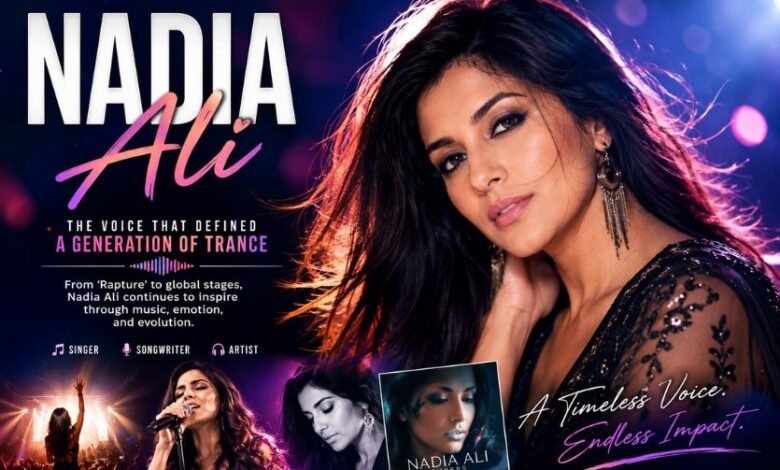
A voice can redefine an entire musical movement when it carries both emotional weight and unmistakable identity. Few artists in electronic music have achieved that level of recognition while still maintaining artistic evolution across decades. Nadia Ali stands among those rare voices whose sound not only shaped early 2000s trance culture but also continued to transform alongside the shifting landscape of global electronic and pop music. Her journey reflects resilience, reinvention, and a deep connection between cultural roots and modern sound design, making her one of the most influential female vocalists in electronic dance music history.
Also Read: Valplekar
Early Life and Cultural Foundations
The story of Nadia Ali begins in Tripoli, Libya, where she was born to Pakistani parents. Her early childhood was shaped by a multicultural environment that would later become a defining influence in her music. Moving to Queens, New York at a young age exposed her to a dense and diverse musical ecosystem, where South Asian traditions blended with American pop, hip-hop, and emerging electronic styles.
Growing up in New York played a crucial role in shaping her artistic identity. The city’s fast-paced creative environment allowed her to absorb multiple genres simultaneously, while her household preserved strong cultural ties to Pakistani heritage. This dual exposure created a unique artistic lens where emotional depth and rhythmic experimentation naturally merged. Music was not simply entertainment for her but a form of storytelling, expression, and emotional release.
During her teenage years, she began writing lyrics and exploring vocal performance. Rather than pursuing conventional musical training alone, she developed her voice through experimentation, listening, and emotional interpretation. This self-driven approach later became one of her strongest artistic traits, allowing her to adapt across genres while maintaining a signature vocal tone.
Entry into the Music Industry and the iiO Breakthrough
The turning point in Nadia Ali’s career came when she entered the electronic music scene in the early 2000s as the lead vocalist of the group iiO. The duo quickly gained attention for blending hypnotic electronic production with emotionally charged vocals, a combination that was still relatively new in mainstream dance music at the time.
Their breakout single “Rapture” became an international sensation and marked a defining moment in early 21st-century trance music. The track’s success was driven largely by Nadia Ali’s distinctive voice, which carried a melancholic yet uplifting quality that resonated deeply with listeners across Europe and beyond. The song climbed global charts and became a staple in clubs, radio stations, and DJ sets, effectively introducing a new standard for vocal-driven trance music.
Following this success, iiO released additional tracks that reinforced their presence in the electronic music world. The project demonstrated how vocal storytelling could elevate electronic production from purely rhythmic compositions into emotionally layered experiences. Nadia Ali’s contribution was central to this transformation, as her vocal delivery added depth and human connection to synthetic soundscapes.
Transition to a Solo Career and Artistic Independence
After achieving significant success with iiO, Nadia Ali made the pivotal decision to pursue a solo career. This transition marked not only a professional shift but also an artistic awakening. She sought greater control over her musical direction, songwriting, and creative expression.
Her solo work revealed a more personal and introspective side of her artistry. The debut solo album “Embers” showcased her ability to merge electronic production with intimate lyrical themes. The album reflected emotional complexity, exploring topics such as love, vulnerability, desire, and self-discovery. Unlike many electronic music releases of the time, her solo work emphasized narrative depth as much as sonic energy.
One of her most notable solo successes came with the track “Love Story,” which achieved major recognition in dance music charts. The song demonstrated her ability to craft commercially successful music without compromising emotional authenticity. Her voice remained the central instrument, guiding listeners through layered electronic arrangements that balanced energy with emotional resonance.
Signature Sound and Musical Identity
Nadia Ali’s musical identity is defined by a rare combination of emotional vulnerability and rhythmic precision. Her voice carries a distinctive tone that blends softness with intensity, allowing her to navigate both high-energy dance tracks and stripped-down melodic compositions.
Her sound is often associated with trance, progressive house, and electronic pop, yet it resists strict genre classification. Instead, her music exists in a hybrid space where cultural influences, electronic innovation, and lyrical storytelling converge. The emotional honesty in her vocals has become a defining characteristic, often described by listeners as both haunting and uplifting.
Her songwriting style reflects a deep understanding of emotional tension and release. Rather than relying solely on production elements to create impact, she uses vocal phrasing and lyrical pacing to build atmosphere. This approach allows her music to maintain longevity, as it connects with listeners on both emotional and rhythmic levels.
Collaborations and Global Recognition
Throughout her career, Nadia Ali has collaborated with numerous prominent producers and DJs in the electronic music industry. These collaborations expanded her influence beyond trance into progressive house, EDM, and mainstream dance music. Working with artists across different styles allowed her to continuously evolve while maintaining her signature vocal identity.
Tracks such as “Pressure” and “Must Be the Love” showcased her adaptability within high-energy production environments. These collaborations introduced her voice to new audiences and further solidified her reputation as one of the most sought-after vocalists in electronic music.
Her ability to seamlessly integrate into different production styles without losing her identity contributed to her global recognition. DJs and producers valued her not only for her vocal talent but also for her understanding of musical structure and emotional dynamics within electronic compositions.
Reinvention Through HYLLS and Artistic Evolution
As her career progressed, Nadia Ali began exploring new artistic directions under the project name HYLLS. This phase represented a significant departure from her earlier EDM-focused identity. The HYLLS project leaned more toward indie pop, experimental production, and minimalistic sound design.
This transformation reflected her desire to explore music beyond the expectations of the electronic dance music industry. The HYLLS era allowed her to focus on storytelling and emotional expression in a more subdued sonic environment. The shift demonstrated her willingness to take creative risks and redefine her artistic boundaries.
The music produced during this period carried a more reflective tone, emphasizing personal narratives and atmospheric soundscapes. Rather than relying on club-oriented beats, the focus shifted toward lyrical intimacy and subtle production layers. This reinvention highlighted her versatility as an artist capable of thriving outside the genre that originally brought her fame.
Impact on Electronic Music and Female Representation
Nadia Ali’s influence extends beyond her discography. She played a significant role in shaping the presence of female vocalists in electronic music, particularly during a time when the genre was heavily dominated by producers and DJs. Her success demonstrated that vocalists could be central creative forces rather than secondary contributors.
Her work helped pave the way for future generations of female artists in EDM, encouraging a more balanced representation of vocal talent within the genre. Many contemporary vocalists cite her as an influence, particularly in how she blends emotional storytelling with electronic production.
Her impact is also evident in how trance and progressive house evolved during the 2000s and 2010s. The integration of emotionally driven vocals became more common, and her early work is often referenced as a key influence in this transition.
Legacy and Continuing Influence
Nadia Ali’s legacy is defined by transformation, authenticity, and emotional depth. Her ability to evolve across genres while maintaining a recognizable vocal identity has made her a lasting figure in global music culture. From her early success with iiO to her solo career and experimental projects, she has consistently demonstrated artistic courage and innovation.
Her music continues to resonate with both longtime fans and new listeners discovering electronic music history. The emotional core of her work ensures its relevance across changing musical trends, while her willingness to reinvent herself keeps her artistic narrative dynamic and forward-looking.
Today, Nadia Ali remains a symbol of how cultural diversity, emotional honesty, and creative risk-taking can shape a lasting career in music. Her journey reflects not only personal success but also the broader evolution of electronic music into a genre where emotion and technology coexist in powerful harmony.