Space Exploration Technologies Corp.: Company, Stock, IPO, Starlink and Future Growth

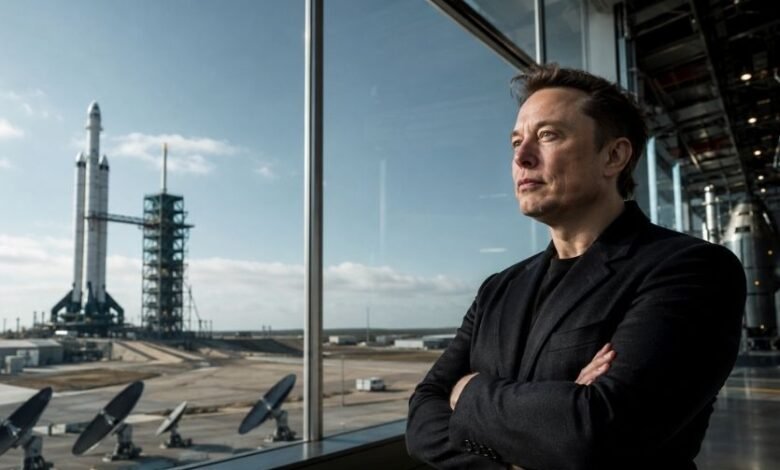
Space Exploration Technologies Corp., better known as SpaceX, has entered a new chapter in 2026. What began as an ambitious aerospace company focused on making spaceflight more affordable has evolved into a much broader technology business spanning orbital launch services, satellite communications, artificial intelligence and next-generation space infrastructure.
The company’s public-market debut made that transformation even more significant. SpaceX began trading on Nasdaq under the ticker SPCX in June 2026 after pricing its initial public offering at $135 per share. The IPO initially raised $75 billion, and the underwriters’ full exercise of their option ultimately increased the amount raised to approximately $85.7 billion.
For investors, technology enthusiasts and followers of the space industry, Space Exploration Technologies Corp. now represents much more than a rocket manufacturer. Its Starlink network has become a major source of revenue, while its growing artificial-intelligence operation is creating a new and potentially enormous business opportunity. At the same time, the company’s huge spending requirements, ambitious Starship plans and unusual corporate structure create significant questions about its long-term performance.
Quick Table: Space Exploration Technologies Corp.
| Field | Details |
|---|---|
| Full name | Space Exploration Technologies Corp. |
| Common name | SpaceX |
| Founded | 2002 |
| Founder | Elon Musk |
| Industry | Aerospace, satellite communications and technology |
| Headquarters | Texas, United States |
| Public ticker | SPCX |
| Exchange | Nasdaq |
| IPO price | $135 per share |
| Major business | Space launches and satellite connectivity |
| Major network | Starlink |
| Major spacecraft program | Starship |
| CEO | Elon Musk |
| President and COO | Gwynne Shotwell |
| Public-market status | Public company since June 2026 |
What Is Space Exploration Technologies Corp.?
Space Exploration Technologies Corp. is an American aerospace and technology company commonly known as SpaceX. Founded by Elon Musk in 2002, the company was created around the idea that dramatically reducing the cost of launching payloads into space could eventually make ambitious space exploration more practical.
Its early development centered on rockets, but SpaceX gradually built a much broader ecosystem. The company developed the Falcon launch family, created reusable rocket technology, established the Dragon spacecraft program and later built Starlink, a satellite-based broadband network operating through a large constellation of satellites in low Earth orbit.
The company has now expanded its ambitions further. Its public-market filings and recent financial results show a business increasingly organized around space, connectivity and artificial intelligence. This combination makes Space Exploration Technologies Corp. unusual because its financial future is no longer dependent on a single aerospace product.
The Evolution of SpaceX
SpaceX’s development has been closely connected with the challenge of making rockets reusable. Traditional launch vehicles were generally designed for limited use, meaning enormous amounts of hardware were discarded after missions. SpaceX pursued a different approach by developing rockets capable of returning to Earth and flying again.
The Falcon 9 became one of the most recognizable examples of this strategy. Reusability helped SpaceX establish a strong position in commercial launches and government missions while creating the foundation for its broader satellite business.
The company’s Dragon spacecraft also became important to its relationship with NASA and other customers. Over time, SpaceX moved from being a young rocket company into an integrated space business capable of designing spacecraft, launching satellites and operating a communications network.
That evolution is important when examining Space Exploration Technologies Corp. today because the company is no longer simply competing for individual rocket launches. It is building an interconnected technology platform.
Space Exploration Technologies Corp. and the 2026 IPO
The biggest corporate milestone in SpaceX’s history came in June 2026, when the company became publicly traded.
SpaceX priced its IPO at $135 per share, offering approximately 555.6 million shares. The initial transaction raised about $75 billion, making it the largest IPO ever at the time. After the underwriters exercised their additional share option, the total amount raised reached approximately $85.7 billion.
The company trades under the ticker SPCX on Nasdaq.
The debut generated extraordinary market attention. SpaceX shares opened around $150 and climbed as high as approximately $176 during the first trading session before closing at $160.95, up about 19% from the IPO price. The move temporarily pushed the company’s market capitalization close to $2.3 trillion.
The IPO changed the relationship between SpaceX and investors. For years, investors could only gain indirect exposure to SpaceX through private-market transactions or companies associated with Elon Musk. The public listing created a direct market for SpaceX shares.
Space Exploration Technologies Corp. Stock
The SPCX stock story has been highly volatile since its debut. The initial enthusiasm surrounding the IPO pushed shares sharply higher, but the stock subsequently experienced significant declines.
By July, SpaceX shares had fallen close to the $135 IPO price after trading substantially above it during the company’s first weeks as a public business. The relatively small public float contributed to unusual volatility because only a limited proportion of the company’s overall shares were initially available for public trading.
For investors researching Space Exploration Technologies Corp. stock, the most important consideration is that the share price reflects expectations about several businesses at once. Starlink provides established recurring revenue, the launch business provides aerospace capabilities, Starship represents a long-term technological bet, and artificial intelligence introduces a potentially massive but capital-intensive growth opportunity.
Consequently, SPCX is not a conventional aerospace stock. Its valuation depends on expectations about communications, cloud computing, AI infrastructure and future space markets as well as traditional launch services.
Space Exploration Technologies Corp. Shareholders and Corporate Control
Space Exploration Technologies Corp. also has an unusual shareholder structure. The company uses multiple classes of common stock with different voting rights, giving certain shareholders considerably greater voting power than their economic ownership alone would suggest.
Elon Musk remains central to the company’s governance. The public-company structure did not eliminate his control over strategic decisions. Instead, the dual-class arrangement preserves substantial voting influence.
This is an important consideration for anyone researching Space Exploration Technologies Corp. shareholders. Ownership percentage and voting power are not necessarily the same thing. A shareholder can own a smaller economic stake while retaining a much larger influence over corporate decisions through higher-vote shares.
For ordinary investors, this means purchasing SPCX shares provides economic participation in the company’s future but does not necessarily provide proportionate influence over its strategic direction.
Starlink: The Financial Engine Behind SpaceX
Starlink has become one of the most important parts of Space Exploration Technologies Corp.
The service uses a large constellation of satellites in low Earth orbit to provide broadband connectivity. Unlike SpaceX’s launch business, which generally produces revenue through individual missions and contracts, Starlink creates recurring revenue from customers who subscribe to its internet services.
That distinction has transformed the company’s financial profile.
SpaceX reported approximately 12 million Starlink subscribers by the middle of 2026. Starlink’s growth has expanded across consumer, enterprise and government markets, while the company has also pursued aviation and other specialized connectivity opportunities.
Starlink has become particularly important because it gives SpaceX a direct relationship with millions of customers rather than relying exclusively on governments, satellite operators and commercial launch customers.
The network also benefits from SpaceX’s ability to launch its own satellites. The company controls much of the technology stack, from satellite production to launch operations and network deployment.
Space Exploration Technologies Corp. Financial Performance
SpaceX’s first public quarterly earnings report provided investors with a much clearer picture of its financial performance.
For the second quarter of 2026, SpaceX reported approximately $7.8 billion in revenue, nearly double the roughly $4.1 billion reported during the same quarter of the previous year. Reuters reported that Starlink accounted for more than half of total revenue, while the company’s emerging AI operation grew dramatically.
TechCrunch similarly reported that revenue increased by approximately 92% year over year, with Starlink contributing significant growth and the AI division adding nearly $2 billion in incremental revenue compared with the previous year.
The financial picture is more complicated than the revenue growth alone suggests. SpaceX continues to spend heavily on infrastructure and development. Reuters reported that capital expenditure exceeded $18 billion during the quarter, including approximately $15.83 billion directed toward AI infrastructure.
This creates a central investment question: how quickly can SpaceX convert its rapidly expanding revenue base into sustainable profitability while simultaneously funding ambitious new businesses?
SpaceX and Artificial Intelligence
Artificial intelligence has become one of the most important new components of Space Exploration Technologies Corp.
The company has moved into AI computing infrastructure and related technology as part of a broader strategy that connects terrestrial computing with its space capabilities. SpaceX has also pursued major commercial arrangements involving computing capacity.
According to reporting on the company’s first quarterly results, AI revenue rose dramatically during 2026. Reuters reported that AI revenue increased by roughly 250% year over year in the second quarter.
The opportunity is enormous, but so are the costs.
SpaceX is investing billions of dollars in AI infrastructure, data centers and computing capacity. This is fundamentally different from its traditional rocket business because AI requires large-scale computing resources, chips, power infrastructure and data-center investment.
For investors, the AI strategy therefore represents both an opportunity and a risk. If SpaceX can successfully monetize its computing infrastructure, the business could become a major contributor to future revenue. If spending grows faster than customer demand or profitability, however, the investment could place pressure on cash flow and returns.
Starship and the Future of Space Exploration
Starship is perhaps the most ambitious technological project within Space Exploration Technologies Corp.
The system is designed around the concept of a large, reusable spacecraft and booster capable of carrying substantial payloads into orbit. SpaceX has positioned Starship as an important part of its long-term plans for satellite deployment, lunar missions and eventually deeper space exploration.
The company’s IPO filing placed significant emphasis on Starship’s potential. SpaceX has also indicated that Starship could eventually support large-scale deployment of Starlink satellites and other future infrastructure.
Starship’s development remains one of the biggest variables in the company’s future. Successful reusability could dramatically change the economics of space transportation. However, achieving rapid and reliable reuse at the scale SpaceX envisions remains a substantial engineering challenge.
The company’s third-generation Starship program demonstrated progress in 2026, although one test experienced a booster landing problem. SpaceX subsequently made modifications intended to improve engine relight and vehicle control during the return sequence.
Space Exploration Technologies Corp. Investor Relations
The creation of a public company has also transformed the importance of investor relations for SpaceX.
Before the IPO, much of the company’s financial information was unavailable to ordinary investors. The IPO registration process changed that by providing extensive information about SpaceX’s revenue, expenses, risks, business segments, ownership structure and long-term strategy.
As a public company, Space Exploration Technologies Corp. must now provide periodic financial information and communicate material developments to investors through the appropriate regulatory framework.
This makes SEC filings and official company disclosures particularly important for anyone researching Space Exploration Technologies Corp. annual reports, earnings, stock performance or shareholder information.
Space Exploration Technologies Corp. Annual Reports and Financial Disclosures
The term “annual report” can be slightly confusing when discussing SpaceX because the company only recently became public.
Its IPO registration documents provided extensive historical financial information, while its subsequent public-company reporting has given investors regular updates about revenue, spending and business developments.
The company’s first public earnings period was particularly important because it gave investors a detailed look at how Starlink, space operations and AI were contributing to the overall business.
As SpaceX builds its history as a public company, future annual reports should become increasingly important for understanding long-term revenue growth, profitability, capital expenditure, subscriber trends and shareholder returns.
Risks Facing Space Exploration Technologies Corp.
Despite its enormous opportunities, Space Exploration Technologies Corp. faces several significant risks.
One of the biggest is capital intensity. The company is simultaneously developing rockets, satellites, communications infrastructure and AI computing systems. These projects require billions of dollars in investment.
Starship also carries execution risk. The long-term business case assumes that the system can eventually achieve reliable and economical reuse. Delays or technical difficulties could affect the timing of future missions and infrastructure plans.
Another risk is valuation. SpaceX entered public markets at an exceptionally high valuation, meaning investors are already pricing substantial future growth into the stock. When expectations are extremely high, even strong financial results may not always be enough to support the share price.
Competition is another consideration. Starlink competes with other satellite broadband networks, while SpaceX’s AI ambitions place it in competition with some of the world’s most powerful technology companies.
Finally, corporate governance deserves attention. Musk’s substantial voting influence means that strategic decisions remain strongly connected to the company’s founder and controlling shareholder.
The Future of Space Exploration Technologies Corp.
The future of Space Exploration Technologies Corp. will likely depend on whether the company can successfully combine its established businesses with its ambitious new projects.
Starlink is already a major commercial success and provides recurring revenue that distinguishes SpaceX from many aerospace companies. The launch business continues to provide the technological foundation for the company’s satellite operations.
Starship could become the next major transformation if SpaceX achieves reliable and rapid reusability. Its success could lower launch costs and allow the company to deploy satellites and other orbital infrastructure at a scale that would be difficult using conventional launch systems.
Artificial intelligence represents another potentially transformative opportunity. The company is attempting to build a significant AI infrastructure business while connecting that strategy with its existing technological capabilities.
Reuters reported that SpaceX was targeting a $100 billion annualized revenue run rate by the end of 2026, illustrating the scale of management’s ambitions.
Whether SpaceX reaches that goal is less important than the broader direction it reveals. The company is attempting to evolve from a leading rocket and satellite business into a diversified technology platform spanning Earth and space.
Why Space Exploration Technologies Corp. Matters
Space Exploration Technologies Corp. is important because it sits at the intersection of several rapidly developing industries.
Its rocket technology has changed expectations about reusable launch vehicles. Starlink has demonstrated that low-Earth-orbit satellites can become a mass-market connectivity platform. Starship represents a potential new generation of heavy-lift space transportation. Its AI strategy is an attempt to extend the company into one of the world’s fastest-growing technology markets.
The public listing adds another dimension. Investors can now directly participate in the company’s performance, while SpaceX must operate under the greater transparency and scrutiny associated with being a public corporation.
That combination makes Space Exploration Technologies Corp. one of the most closely watched companies in the global technology and aerospace sectors.
Conclusion
Space Exploration Technologies Corp. has moved far beyond its original identity as a rocket startup. In 2026, SpaceX is a publicly traded technology company with major operations in aerospace, satellite communications and artificial intelligence.
Its historic IPO, rapid Starlink growth, expanding AI business and ambitious Starship program give the company several potential paths toward future growth. At the same time, enormous capital requirements, technological challenges, stock volatility and concentrated voting control make the investment story more complicated than its headline growth figures suggest.
For readers researching Space Exploration Technologies Corp., the most important point is that the company’s future cannot be understood by looking only at rockets. Starlink is now central to the financial story, AI is becoming increasingly important to its growth strategy, and Starship could determine how far the company can extend its influence into the next generation of space infrastructure.
The story of Space Exploration Technologies Corp. is therefore no longer simply about reaching orbit. It is about building an interconnected technology business that could operate across communications, computing and space for decades to come.