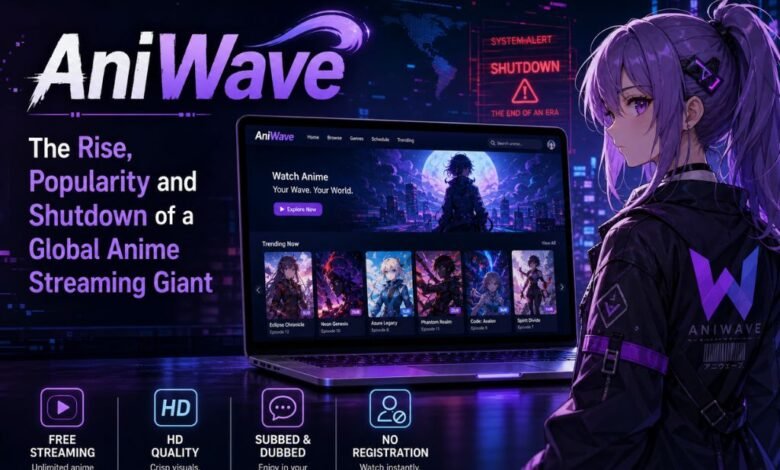
AniWave: The Rise, Popularity, and Shutdown of a Global Anime Streaming Giant

Introduction
In the digital age, anime has grown from a niche interest into a global cultural phenomenon. Millions of fans around the world seek convenient ways to watch their favorite shows, from timeless classics to the latest seasonal releases. Among the many platforms that emerged to meet this demand, AniWave stood out as one of the most popular—and controversial.
Originally known as 9anime, AniWave became a household name among anime enthusiasts due to its vast library, ease of use, and completely free access. However, its success was shadowed by legal issues, ultimately leading to its shutdown in 2024.
This article explores the full story of AniWave, including its origins, features, global impact, legal challenges, and eventual closure.
The Origins of AniWave
AniWave began its journey in 2016 under the name 9anime. At a time when legal anime streaming platforms were limited in availability—especially in developing regions—9anime filled a significant gap. It provided instant access to a wide range of anime content without requiring subscriptions or even user registration.
Over the years, 9anime built a loyal user base by focusing on accessibility and performance. The platform gained a reputation for fast streaming, minimal buffering, and regularly updated content.
In 2023, the platform rebranded itself as AniWave. This change was widely seen as an attempt to distance the site from increasing legal scrutiny and to maintain its operations under a new identity.
Features That Made AniWave Popular
AniWave’s success was not accidental. It offered a combination of features that made it highly appealing to users across the globe.
1. Free and Instant Access
One of AniWave’s biggest advantages was that it was completely free. Unlike legal platforms such as Crunchyroll or Netflix, AniWave did not require any subscription fees. Users could simply visit the site and start watching.
2. Extensive Anime Library
AniWave hosted a massive collection of anime, including:
- Classic titles
- Ongoing seasonal anime
- Anime movies and specials
This wide selection ensured that users could find almost any anime they were looking for in one place.
3. Subbed and Dubbed Content
The platform catered to a diverse audience by offering both:
- Subtitled (Japanese audio with English subtitles)
- Dubbed (English voice-over)
This made it accessible to both purists and casual viewers.
4. High-Quality Streaming
AniWave supported multiple video qualities, ranging from 720p to 1080p and even 4K in some cases. This flexibility allowed users with different internet speeds to enjoy a smooth viewing experience.
5. User-Friendly Interface
The website featured a clean and intuitive design. Users could easily:
- Search for anime titles
- Browse by genre or release year
- Access recently added episodes
6. No Registration Required
Unlike many platforms, AniWave did not require users to create an account. This eliminated barriers and made it especially attractive to casual viewers.
Global Popularity and User Base
AniWave quickly rose to prominence as one of the most visited anime streaming websites in the world. At its peak, it attracted tens of millions of users every month.
Its popularity was particularly strong in regions where legal streaming services were either unavailable or too expensive. For many fans, AniWave served as their primary gateway to anime.
The platform also benefited from word-of-mouth promotion and online communities, where users frequently shared links and recommendations.
The Legal Controversy
Despite its popularity, AniWave operated in a legal gray area—or more accurately, outside the bounds of copyright law.
Copyright Infringement
AniWave did not own the rights to the content it streamed. Instead, it hosted or linked to copyrighted anime without authorization. This made it a target for anti-piracy organizations and copyright holders.
Industry Response
Organizations such as the Alliance for Creativity and Entertainment actively worked to shut down piracy websites like AniWave. These groups represent major studios and streaming companies that lose revenue due to unauthorized distribution.
Ethical Debate
AniWave’s existence sparked ongoing debates within the anime community:
- Some users argued that it made anime accessible to underserved regions.
- Others pointed out that piracy harms creators and the industry as a whole.
Rebranding from 9anime to AniWave
In 2023, 9anime officially rebranded to AniWave. This move was widely interpreted as an attempt to:
- Avoid legal detection
- Refresh the platform’s identity
- Continue operations under a new name
While the rebranding temporarily helped the platform maintain its presence, it did not eliminate the underlying legal risks.
The Shutdown of AniWave
In August 2024, AniWave was officially shut down as part of a global anti-piracy crackdown.
What Happened?
Authorities, in collaboration with international organizations, targeted major piracy networks. AniWave, being one of the largest, was a primary target.
The shutdown was reportedly linked to enforcement actions involving multiple countries, including Vietnam, where many such sites are believed to have operated.
Final Message
Before going offline, AniWave displayed a message encouraging users to support legal streaming platforms. This marked a surprising and somewhat ironic end to a platform built on free access.
The Aftermath: Clones and Mirror Sites
Following AniWave’s shutdown, numerous clone and mirror sites began appearing online. These sites often used the AniWave name to attract former users.
However, these clones come with significant risks:
- Malware and phishing threats
- Poor streaming quality
- Unreliable or fake content
Users are generally advised to avoid such sites and opt for legitimate platforms instead.
Impact on the Anime Industry
AniWave’s rise and fall had a notable impact on the anime industry.
Increased Awareness
The platform highlighted the global demand for anime, especially in regions underserved by legal platforms.
Push for Accessibility
In response to piracy, legal services have made efforts to:
- Expand global availability
- Offer affordable subscription plans
- Provide simultaneous releases (simulcasts)
Financial Implications
While piracy platforms like AniWave attracted millions of users, they also represented lost revenue for creators, studios, and distributors.
Legal Alternatives to AniWave
After AniWave’s shutdown, many users turned to legal streaming services such as:
- Crunchyroll
- Netflix
- Amazon Prime Video
These platforms offer licensed content, better security, and support for the anime industry.
Why AniWave Was So Successful
AniWave’s success can be attributed to several key factors:
- Zero cost
- Massive content library
- Ease of access
- Fast streaming performance
- Availability in restricted regions
These elements combined to create a platform that was difficult for legal services to compete with—at least initially.
Lessons from AniWave’s Story
AniWave’s journey offers important lessons for both users and the entertainment industry:
For Users
- Free content often comes with risks
- Supporting legal platforms helps creators
For the Industry
- Accessibility and affordability are crucial
- Global audiences must be considered
Conclusion
AniWave remains one of the most significant anime streaming platforms in internet history. Its rise demonstrated the immense global demand for anime, while its fall underscored the legal and ethical challenges of piracy.
Although it is no longer active, AniWave’s legacy continues to influence how anime is distributed and consumed worldwide. As legal platforms evolve and expand, the gap that once allowed sites like AniWave to thrive is gradually closing.