How Smart Home Technology Will Change Lives: Transforming the Future of Everyday Living

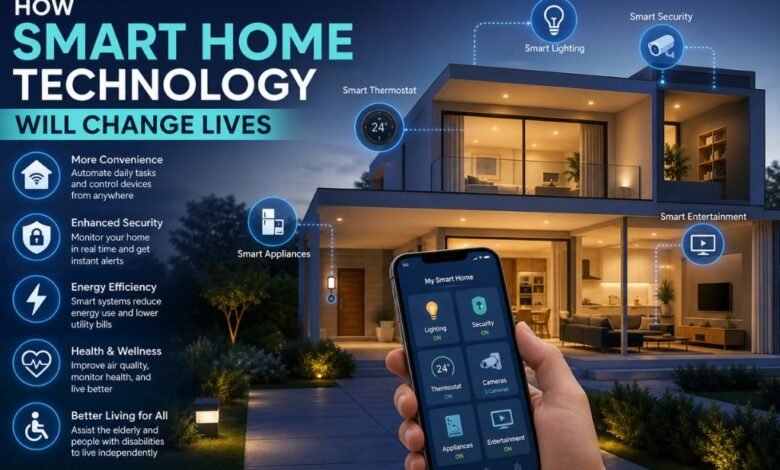
Technology is no longer limited to smartphones, laptops, or office systems. It has moved into the most personal part of life: the home. Over the past decade, smart home technology has evolved from a futuristic concept into a practical solution that is reshaping the way people live, work, and manage daily tasks. From voice-controlled assistants to automated lighting and advanced security systems, connected devices are creating homes that are more intelligent, efficient, and responsive to human needs.
The rise of the Internet of Things (IoT) has made this transformation possible. IoT allows devices such as thermostats, refrigerators, cameras, door locks, and entertainment systems to connect through the internet and communicate with each other. As a result, homes are becoming ecosystems where devices work together to improve comfort, safety, convenience, and energy efficiency.
In the coming years, smart home technology will do much more than automate basic tasks. It will fundamentally change lifestyles, health management, security standards, environmental sustainability, and even the way families interact with their living spaces.
The Evolution of Smart Homes
A few years ago, smart homes were often viewed as luxury projects for technology enthusiasts or wealthy homeowners. Installing automated systems required expensive hardware, specialized technicians, and complex configurations. Today, smart home devices are far more affordable and user-friendly.
Products such as smart speakers, smart bulbs, robotic vacuum cleaners, video doorbells, and connected appliances are now available to average consumers. Voice assistants like Amazon Alexa, Google Assistant, and Apple Siri have made home automation more accessible by allowing users to control devices using simple voice commands.
This accessibility means smart homes are moving from optional upgrades to practical necessities. As prices continue to drop and technology improves, more households will integrate smart devices into daily routines.
Improved Convenience and Daily Efficiency
One of the most immediate ways smart home technology changes lives is through convenience. Everyday routines often involve repetitive tasks such as switching lights on and off, adjusting room temperatures, locking doors, or checking appliances. Smart automation removes much of this manual effort.
Imagine waking up in the morning and your curtains automatically opening, coffee machine starting, bedroom lights gradually brightening, and thermostat adjusting to your preferred temperature. These tasks happen without requiring any action from you.
Similarly, when leaving home, one command can lock doors, turn off lights, activate security cameras, and reduce energy usage. This level of automation saves time and reduces mental load.
Busy families benefit significantly from these systems. Parents can remotely monitor children arriving home from school, check whether doors are locked, or receive notifications if unusual activity occurs.
The result is a smoother, more organized lifestyle where technology handles routine responsibilities.
Better Energy Efficiency and Lower Utility Bills
Energy consumption is a growing concern globally due to rising costs and environmental awareness. Smart home technology helps households reduce waste and optimize resource usage.
Smart thermostats are among the most impactful devices in this area. They learn user preferences and automatically adjust heating or cooling based on schedules, occupancy, and weather conditions. For example, the thermostat can lower air conditioning while residents are away and cool the house shortly before they return.
Smart lighting systems reduce electricity waste by automatically switching off unused lights or dimming brightness according to natural daylight.
Connected appliances also contribute to efficiency. Smart washing machines can run during off-peak electricity hours, while refrigerators can optimize cooling performance.
Benefits include:
- Reduced electricity bills
- Lower water usage
- Less environmental impact
- More sustainable living habits
As climate concerns intensify, smart homes will play a major role in supporting greener lifestyles.
Enhanced Home Security and Safety
Security is one of the strongest reasons people adopt smart home technology. Traditional home security relied heavily on locks, alarms, and occasional camera systems. Smart security adds intelligence, accessibility, and real-time monitoring.
Modern smart security systems include:
- Smart locks
- Video doorbells
- Motion detectors
- Indoor and outdoor cameras
- Window and door sensors
- Smoke and carbon monoxide detectors
Homeowners can monitor live camera feeds from smartphones, receive alerts about suspicious movement, and communicate with visitors remotely.
For example, if someone approaches your front door while you are away, your video doorbell sends a notification instantly. You can see the visitor, speak to them, or ignore them.
Smart locks allow remote locking and unlocking, which is useful for family members, delivery personnel, or guests.
Safety extends beyond burglary prevention. Smart smoke detectors send emergency alerts if smoke or gas leaks are detected, potentially preventing major accidents.
This constant awareness provides peace of mind and stronger household protection.
Greater Accessibility for Elderly and Disabled Individuals
Smart home technology is particularly transformative for elderly individuals and people living with disabilities.
Simple tasks like turning on lights, adjusting thermostats, opening blinds, or locking doors can become difficult with age or physical limitations. Voice-controlled systems eliminate these barriers.
For example, a person with mobility challenges can use voice commands to:
- Control appliances
- Open doors
- Adjust room settings
- Contact emergency services
- Monitor medication reminders
Smart sensors can also detect falls or unusual inactivity, automatically alerting caregivers or family members.
This technology promotes independent living, allowing people to remain in their homes longer without sacrificing safety or comfort.
As global populations age, smart homes will become increasingly valuable in elderly care and assisted living.
Improved Health and Wellness Monitoring
Homes are evolving into environments that actively support physical and mental well-being.
Smart health devices and environmental sensors can monitor:
- Air quality
- Humidity levels
- Sleep patterns
- Water quality
- Indoor temperature
- Noise levels
Poor indoor air quality contributes to respiratory issues, allergies, and fatigue. Smart air purifiers and sensors can detect pollutants and automatically improve conditions.
Smart mattresses and sleep trackers analyze sleep quality and recommend improvements.
Kitchen technology is also advancing. Smart refrigerators can track food freshness, suggest healthier meals, and reduce waste.
Future smart homes may integrate health monitoring systems capable of detecting irregular heart patterns, abnormal movement, or stress indicators.
This turns homes into proactive wellness environments rather than passive shelters.
Personalized Living Through Artificial Intelligence
Artificial intelligence is making smart homes more adaptive and intuitive.
Instead of waiting for commands, future systems will predict user behavior and preferences.
Examples include:
- Adjusting room temperature based on habits
- Playing preferred music at certain times
- Suggesting grocery orders when supplies run low
- Preparing lighting scenes for work, relaxation, or sleep
AI learns routines over time and creates increasingly personalized experiences.
For example, if you typically dim lights and lower temperature at 10 PM, the system may begin doing this automatically.
Homes will evolve from responsive environments into predictive assistants.
This deep personalization enhances comfort while minimizing effort.
Remote Home Management from Anywhere
Modern lifestyles are increasingly mobile. People travel, work remotely, and spend significant time away from home.
Smart home systems enable full remote management.
Using a smartphone or tablet, homeowners can:
- Monitor cameras
- Adjust lighting
- Lock or unlock doors
- Control appliances
- Check energy usage
- Receive alerts
Forgot to lock the front door? Lock it remotely.
Want to cool your home before arriving? Adjust thermostat settings from work.
Traveling abroad? Monitor property in real time.
This remote accessibility gives homeowners more control and flexibility regardless of location.
Entertainment and Lifestyle Upgrades
Smart home technology also improves leisure and entertainment.
Connected entertainment systems allow synchronized control of:
- Smart TVs
- Speakers
- Projectors
- Lighting systems
- Streaming platforms
Users can create custom entertainment scenes such as “Movie Night,” where lights dim, blinds close, and streaming services launch automatically.
Multi-room audio systems provide seamless music experiences throughout the home.
Gaming, virtual reality, and immersive technologies will increasingly integrate into smart living spaces.
Homes are becoming not only functional but highly interactive and enjoyable.
Support for Remote Work and Productivity
The growth of remote work has changed household needs. Homes are now offices, classrooms, and productivity centers.
Smart technology supports this shift by optimizing work environments.
Examples include:
- Automated lighting for focus
- Noise management systems
- Climate control for productivity
- Smart desks and ergonomic reminders
Smart scheduling systems may coordinate calendars, meeting reminders, and workspace preparation.
As hybrid work continues expanding, intelligent home offices will become standard.
Sustainability and Environmental Impact
Sustainability is no longer optional. Smart homes contribute to environmentally responsible living by optimizing resource consumption.
Future smart homes will integrate:
- Solar energy systems
- Smart water management
- Battery storage solutions
- Waste monitoring
For example, smart irrigation systems can monitor weather forecasts and soil conditions to reduce unnecessary watering.
Energy dashboards help residents understand and reduce consumption patterns.
Combined with renewable energy systems, smart homes may eventually achieve near-zero energy waste.
This contributes to both financial savings and environmental responsibility.
Challenges of Smart Home Adoption
Despite major benefits, challenges remain.
Privacy Concerns
Connected devices collect significant amounts of user data. Consumers worry about surveillance, hacking, and unauthorized access.
Cybersecurity Risks
Poorly secured devices may be vulnerable to attacks.
Initial Costs
Setting up a fully integrated smart home can be expensive.
Device Compatibility
Not all products work seamlessly together.
However, as standards improve and costs decline, these barriers are becoming easier to overcome.
The Future of Smart Living
The future of housing is intelligent, connected, and adaptive.
Soon, homes may include:
- Fully autonomous maintenance systems
- Predictive repairs
- AI household assistants
- Smart furniture
- Integrated robotics
Homes will not simply respond to commands—they will anticipate needs, solve problems, and actively improve quality of life.
Smart home technology is not just changing appliances or home management. It is changing the relationship between people and living spaces.
Instead of static environments, homes are becoming dynamic partners in daily life.
Conclusion
Smart home technology is revolutionizing modern living by making homes safer, more efficient, more personalized, and increasingly intelligent. It improves convenience through automation, lowers energy costs, enhances security, supports health and wellness, and creates better living experiences for families, professionals, elderly individuals, and people with disabilities.
As artificial intelligence, IoT, and automation continue advancing, smart homes will become central to future lifestyles. What once seemed futuristic is quickly becoming reality.
The homes of tomorrow will not simply shelter people—they will actively support, protect, and empower them.