Blobfish in Natural Habitat: Discover the Hidden Life of the Deep-Sea Fish Beyond the Viral Myth

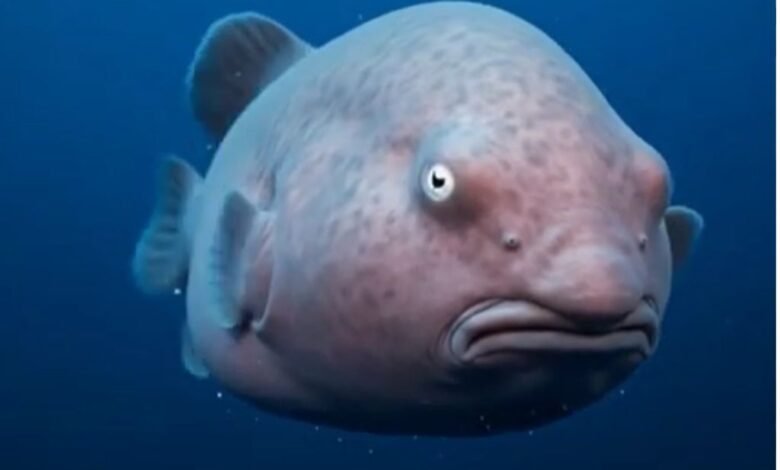
Darkness stretches endlessly beneath the ocean’s surface, where sunlight has long disappeared and crushing pressure shapes every living creature. Far below the waves, one of the world’s most misunderstood animals quietly survives in an environment that few humans will ever witness. The blobfish has become an internet sensation because of its unusual appearance, yet the image most people recognize tells only a small part of its story. The famous drooping face seen in photographs is not how this remarkable fish naturally exists. Instead, Blobfish in Natural Habitat reveals a fascinating creature perfectly designed for life in one of Earth’s most extreme ecosystems.
Hidden among the deep continental slopes near Australia and New Zealand, the blobfish thrives where temperatures remain close to freezing and pressure reaches extraordinary levels. Every feature of its body has evolved to match these harsh conditions, allowing it to survive with minimal energy in a world where food is scarce and survival depends on remarkable adaptation. Understanding Blobfish in Natural Habitat offers a completely different perspective, replacing internet myths with scientific reality and revealing an extraordinary example of evolution at work.
Understanding the Blobfish Beyond Its Reputation
The blobfish, scientifically known as Psychrolutes marcidus, belongs to the family Psychrolutidae. Although it has earned worldwide attention as the so-called “world’s ugliest animal,” that reputation comes almost entirely from photographs taken after the fish has been removed from the immense pressure of the deep ocean.
At the surface, the sudden loss of pressure causes the fish’s gelatinous tissues to collapse under gravity. Its facial features sag dramatically, creating the appearance that made it famous online. However, this distorted appearance does not reflect how the fish actually looks while living naturally beneath the sea.
Blobfish in Natural Habitat presents a much healthier and more balanced appearance. Supported by the immense pressure surrounding it, the body remains firm enough to maintain a recognizable fish shape. Rather than appearing melted or deformed, it looks like many other deep-sea fish specially adapted for life near the ocean floor.
The Extraordinary Environment of Blobfish in Natural Habitat
Life Thousands of Feet Below the Ocean Surface
Blobfish inhabit depths ranging from approximately 600 to 1,200 meters beneath the ocean surface. At these incredible depths, sunlight never penetrates, creating permanent darkness that defines the surrounding ecosystem.
The environment remains remarkably cold throughout the year, with water temperatures hovering just above freezing. Oxygen levels differ from those found in shallower waters, while food arrives only occasionally from the layers above. Every creature living here has developed specialized characteristics that allow survival despite these challenging conditions.
The pressure at these depths is perhaps the most extraordinary feature of Blobfish in Natural Habitat. Water pressure can exceed one hundred times that experienced at sea level. Any organism incapable of adapting to such conditions would be crushed almost instantly.
Geographic Distribution
Blobfish are primarily found around the continental slopes of southeastern Australia, Tasmania, and New Zealand. These deep underwater regions provide stable environmental conditions that support diverse communities of deep-sea organisms.
Rather than occupying shallow reefs or open water, blobfish remain close to muddy seabeds, rocky slopes, underwater canyons, and soft sediment plains. These habitats provide both shelter and access to drifting prey.
How Pressure Shapes the Blobfish
The Importance of Extreme Water Pressure
Pressure defines nearly every aspect of Blobfish in Natural Habitat. While humans often imagine pressure as dangerous, it is actually essential for the blobfish’s normal appearance and survival.
Unlike many fish species, blobfish possess very little muscle mass and lack a gas-filled swim bladder. A traditional swim bladder would collapse under deep-sea pressure, making it impossible for the fish to survive.
Instead, the blobfish relies on gelatinous tissues that remain only slightly less dense than seawater. This natural buoyancy allows it to float gently above the seabed without expending significant energy.
Once removed from this high-pressure environment, these tissues lose their structural support. Gravity then causes the body to collapse, creating the familiar blob-like appearance seen in photographs.
Why It Looks Different Underwater
Blobfish in Natural Habitat appears surprisingly ordinary compared to the internet-famous image. Under pressure, the fish maintains a rounded head, broad mouth, flexible fins, and a smooth body shape.
The surrounding water pressure acts almost like an invisible support system, keeping tissues compact and maintaining the fish’s natural proportions. Scientific observations from deep-sea exploration have confirmed that the underwater appearance differs dramatically from the decompressed specimens displayed in museums and media.
Remarkable Physical Adaptations
Gelatinous Body Structure
The blobfish possesses one of the most unique body compositions in the animal kingdom. Much of its body consists of soft, gelatinous tissue rather than dense muscle.
This adaptation serves multiple purposes. It reduces the amount of energy required for movement while also providing natural buoyancy. Since food is limited in deep-sea environments, conserving energy becomes one of the most important survival strategies.
Reduced Skeleton
Unlike fast-swimming fish, blobfish have relatively soft skeletal structures. Their bones do not need to support powerful swimming muscles because the surrounding pressure and buoyancy provide much of the necessary structural assistance.
This lighter framework reduces energy demands while remaining perfectly suited to the deep-sea environment.
Minimal Muscle Development
Strong muscles require substantial amounts of energy to maintain. Blobfish avoid this biological expense by developing only the muscles necessary for slow movement and feeding.
Rather than chasing prey across long distances, they allow food to come within easy reach.
Daily Life of Blobfish in Natural Habitat
A Slow and Energy-Efficient Lifestyle
Life on the deep ocean floor moves at an entirely different pace than in shallow coastal waters. Blobfish spend much of their time hovering just above the seabed while waiting for edible organisms to drift nearby.
This relaxed lifestyle represents an excellent evolutionary strategy rather than laziness. Since food may be scarce for extended periods, unnecessary movement would simply waste valuable energy reserves.
Ocean currents perform much of the work by carrying potential meals toward waiting blobfish.
Interaction with the Seafloor
Blobfish remain closely associated with the ocean bottom throughout most of their lives. Soft mud, scattered rocks, and underwater slopes provide stable resting areas where they can observe passing prey.
Remaining close to the seabed also helps reduce exposure to predators while maximizing feeding opportunities.
Feeding Habits and Diet
Opportunistic Feeding Strategy
Blobfish are opportunistic carnivores that consume whatever suitable prey becomes available. Instead of actively hunting, they rely on patience and positioning.
Small crustaceans, marine worms, mollusks, tiny crabs, sea urchins, and various benthic invertebrates form the majority of their diet.
Because prey availability changes frequently within the deep ocean, blobfish rarely specialize in one particular food source. Their flexible diet increases survival under unpredictable conditions.
Conserving Every Bit of Energy
Energy conservation remains central to Blobfish in Natural Habitat. Every adaptation supports this goal, from their body composition to their feeding behavior.
Waiting for food requires far fewer calories than constant swimming. Over millions of years, natural selection has favored individuals capable of surviving with minimal energy expenditure.
Reproduction and Early Development
Egg Protection
Female blobfish lay thousands of eggs on relatively stable areas of the ocean floor. Unlike many fish species that simply release eggs into open water, blobfish appear to exhibit a degree of parental care.
Researchers have observed adults remaining near developing eggs, likely protecting them from predators and environmental disturbances.
This behavior increases the likelihood that at least some offspring survive long enough to hatch.
Juvenile Survival
Young blobfish face numerous challenges after hatching. The deep ocean contains predators, changing currents, and limited food resources.
Only a small percentage survive to adulthood, making successful reproduction particularly important for maintaining healthy populations.
Predators and Natural Threats
Although the deep sea contains fewer predators than shallow waters, blobfish still face danger from larger deep-sea fish and marine mammals capable of reaching similar depths.
Human activity presents an even greater concern. Deep-sea trawling unintentionally captures blobfish as bycatch while targeting commercially valuable species.
Because blobfish reproduce slowly and inhabit specialized environments, recovering from population losses can take many years.
Scientific Research and Exploration
Challenges of Studying Deep-Sea Animals
Blobfish remain among the least observed fish species because their habitat lies beyond the reach of ordinary diving equipment.
Most scientific discoveries result from remotely operated underwater vehicles, specialized deep-sea submarines, and occasional specimens collected during research expeditions.
These technologies have transformed scientists’ understanding of Blobfish in Natural Habitat by allowing direct observation without removing animals from their natural environment.
Changing Public Perception
As underwater imaging technology has improved, researchers have been able to show the public what blobfish actually look like beneath extreme pressure.
These discoveries have helped replace sensational myths with scientific appreciation for one of nature’s most specialized deep-sea species.
The Deep-Sea Ecosystem Supporting Blobfish
Blobfish share their habitat with a remarkable community of organisms adapted to permanent darkness and immense pressure.
Deep-sea corals, brittle stars, sea cucumbers, giant amphipods, crustaceans, worms, and numerous unusual fish occupy this mysterious environment.
Organic material drifting from upper ocean layers forms the foundation of this ecosystem. Every creature depends, directly or indirectly, on nutrients that slowly descend through thousands of feet of water.
Blobfish play an important role within this food web by helping regulate populations of smaller benthic organisms while serving as prey for larger predators.
Misconceptions About Blobfish
The internet has created countless misunderstandings about blobfish.
Many people believe the fish naturally resembles the drooping creature seen in viral photographs. Others assume it is incapable of swimming or surviving independently.
Scientific evidence paints a completely different picture. Blobfish are highly specialized animals perfectly adapted to their environment. Their unusual appearance after decompression reflects the physical effects of leaving an extreme habitat rather than any biological abnormality.
Blobfish in Natural Habitat demonstrates how appearances can be misleading when animals are viewed outside the conditions in which evolution shaped them.
Conservation Importance
Deep-sea ecosystems remain among the least explored regions on Earth. As commercial fishing expands into deeper waters, protecting these fragile environments becomes increasingly important.
Blobfish serve as symbols of deep-ocean conservation because their story highlights how little humanity still knows about life beneath the waves.
Responsible fishing practices, improved marine protection, and continued scientific research will all contribute to preserving the remarkable biodiversity found within deep-sea habitats.
Understanding Blobfish in Natural Habitat encourages greater appreciation for ecosystems that remain hidden from everyday human experience.
Why Blobfish Fascinate Scientists
Scientists continue studying blobfish because they represent extraordinary examples of evolutionary specialization.
Their unique body composition, energy-efficient lifestyle, and adaptations to crushing pressure provide valuable insights into biology, biomechanics, and life under extreme environmental conditions.
Research involving deep-sea organisms may even inspire future technologies in engineering, medicine, and materials science by demonstrating how living tissues function under immense pressure.
Every new expedition into the deep ocean has the potential to reveal additional discoveries about blobfish and countless other species that remain poorly understood.
Conclusion
Blobfish in Natural Habitat tells a story far more impressive than any internet meme could capture. Hidden beneath thousands of feet of ocean water, this remarkable fish has evolved into one of nature’s most specialized survivors. Its gelatinous body, reduced muscles, gentle lifestyle, and incredible pressure adaptations are not signs of weakness but evidence of millions of years of successful evolution within one of Earth’s harshest environments.
Looking beyond the famous surface photographs reveals a creature perfectly suited to life in permanent darkness, crushing pressure, and near-freezing temperatures. Rather than being an odd curiosity, the blobfish represents the extraordinary diversity of life found in the deep sea. Continued research and conservation efforts will ensure that future generations can better understand and protect this fascinating inhabitant of the ocean’s hidden world, reminding us that nature’s greatest wonders often exist far beyond human sight.